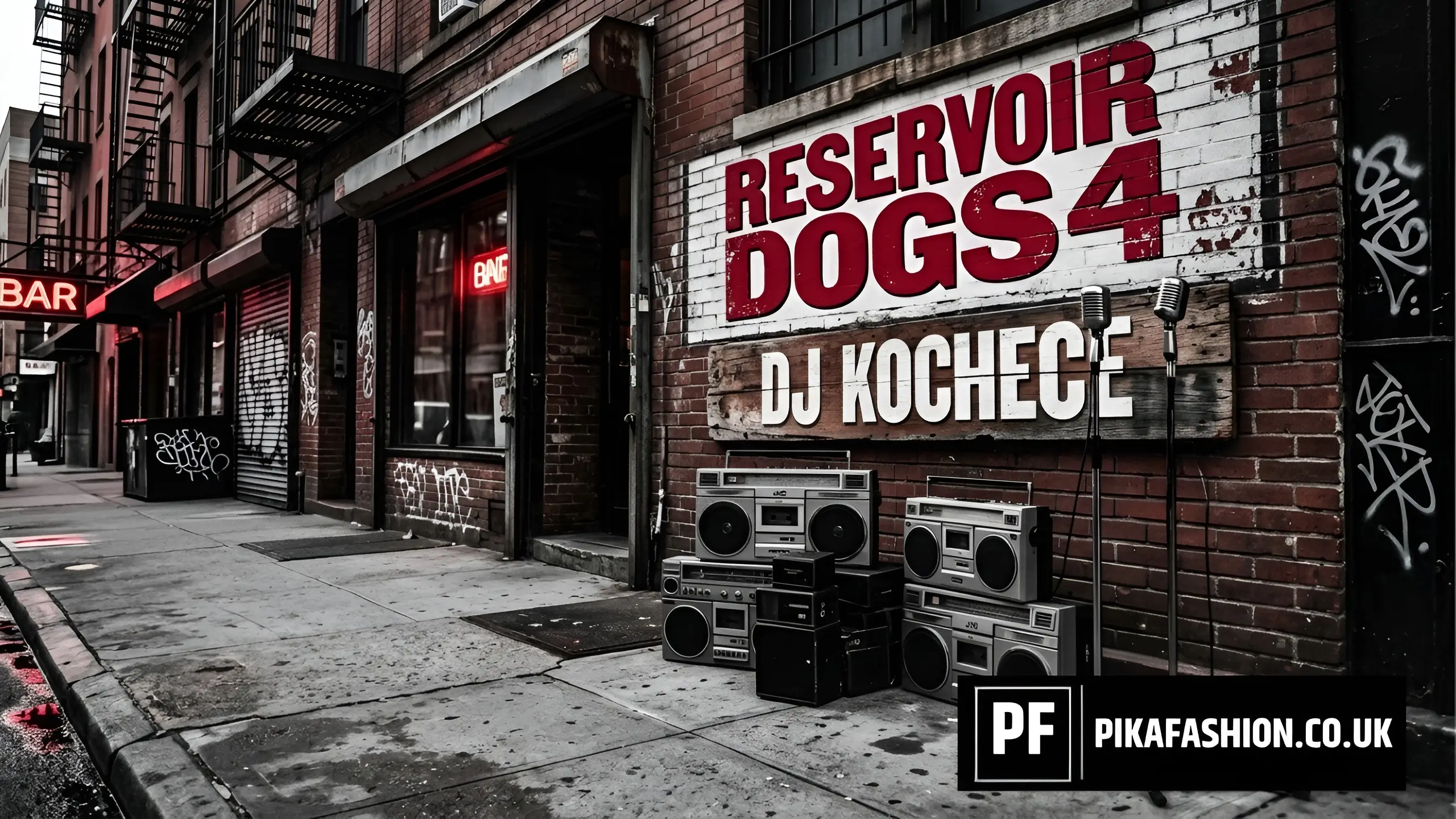
The early 2000s mixtape era represents a golden period in hip-hop history where independent artists, producers, and DJs collaborated to create raw, unfiltered music that often surpassed major-label releases in cultural relevance and artistic authenticity. Within this landscape, the Reservoir Dogs series emerged as a cornerstone project that captured the essence of gritty East Coast hip-hop while showcasing the region’s most talented lyricists. The Reservoir Dogs 4 Kochece Mixtape stands as a particularly significant installment, exemplifying the creative vision and technical prowess that defined underground hip-hop during this transformative period.
DJ Kochece’s hosting and mixing of the Reservoir Dogs 4 project was more than a technical undertaking—it represented a curation of New York’s elite hip-hop talent at a moment when the landscape was shifting. The mixtape functioned as both a time capsule of early-2000s rap aesthetics and a launching pad for artists who would influence the broader hip-hop conversation for years to come. For listeners seeking to understand the roots of contemporary East Coast rap, the Reservoir Dogs 4 Kochece Mixtape provides essential context and entertainment value in equal measure.
Understanding the Reservoir Dogs Mixtape Series
The Reservoir Dogs series didn’t emerge in a vacuum. It was part of a broader mixtape explosion that fundamentally changed how hip-hop was distributed, consumed, and discovered. Before streaming platforms and social media algorithms, mixtapes were the primary vehicle through which underground artists built audiences and established credibility. The Reservoir Dogs series recognized this reality and positioned itself as a platform for excellence rather than mere exposure.
The Conceptual Foundation:
Named after Quentin Tarantino’s iconic 1992 crime film, the series borrowed more than just nomenclature from its cinematic inspiration. The Reservoir Dogs movies are known for their sharp dialogue, moral ambiguity, and focus on character dynamics—elements that the mixtape series translated directly into its approach to hip-hop curation. Just as Tarantino’s films featured ensemble casts of distinctive characters, the Reservoir Dogs mixtapes featured rosters of distinct lyrical voices, each bringing their own perspective and technical skill to shared production spaces.
This thematic coherence elevated the series beyond a simple compilation project. Listeners approaching a new Reservoir Dogs installment knew they weren’t just getting a random collection of freestyle tracks. They were entering a carefully constructed hip-hop universe where production quality, artist selection, and sequencing all contributed to a cohesive artistic statement.
The Underground Hip-Hop Context:
During the period when Reservoir Dogs 4 was released, the underground hip-hop landscape was experiencing significant transformation. Major-label rap was becoming increasingly commercialized, with production focusing on radio-friendly hooks and crossover appeal. Simultaneously, underground producers and artists were developing increasingly sophisticated approaches to lyricism, production, and distribution. The Reservoir Dogs series positioned itself as a bridge—accessible enough for casual hip-hop fans but substantive enough for serious heads and producers.
The series regularly featured artists who embodied this underground ethos: lyricists known for their wordplay rather than their marketing budgets, producers who prioritized sonic creativity over trend-chasing, and DJs who understood that their role extended beyond simply playing records. In this environment, DJ Kochece established himself as more than a technician—he became a tastemaker whose selections reflected genuine understanding of hip-hop’s artistic possibilities.
DJ Kochece: The Architect Behind the Vision
Understanding DJ Kochece’s role is essential to appreciating the Reservoir Dogs 4 project. As the series’ host and mixer, Kochece didn’t simply string together submitted tracks. Instead, he functioned as a creative director, shaping the narrative arc of each installment while maintaining the series’ core identity.
Kochece’s Background and Influence:
DJ Kochece emerged during a period when DJ skills encompassed far more than mixing records at nightclubs. The rise of hip-hop production and mixtape culture created new opportunities for DJs to demonstrate their understanding of music production, arrangement, and artist development. Kochece’s approach combined technical mixing proficiency with a sharp ear for production quality and lyrical content. His work on various artist-centric projects, including the notable “Do You Believe In Ghosts” series with Styles P, established a track record of creating cohesive, engaging projects that served both the featured artists and the listening audience.
What distinguished Kochece’s approach was his refusal to treat mixtapes as secondary projects or promotional vehicles. Each installment received the same attention to detail that major-label releases received, if not more. Mixing, sequencing, intro/outro production, and track selection all received careful consideration. This commitment to quality elevated the Reservoir Dogs series beyond the norm for underground mixtapes and contributed to its growing reputation among serious hip-hop listeners and industry professionals.
The Producer as Creative Partner:
Kochece’s relationship with featured artists revealed an understanding of producer-artist dynamics that remains relevant today. Rather than simply accepting submitted tracks and arranging them, Kochece engaged in a collaborative process with artists. This might involve suggesting which verses worked best over which instrumentals, recommending artists who would complement each other’s styles, or identifying production choices that strengthened the overall project narrative.
This approach resulted in mixtapes that felt intentional rather than accidental. Listeners could sense the creative vision underlying each project, which distinguished the Reservoir Dogs series from countless other mixtapes released during the same period. For aspiring DJs and producers, studying Kochece’s work on projects like Reservoir Dogs 4 offers lessons in artist collaboration, project curation, and the importance of treating every release—regardless of platform—as a serious artistic endeavor.
Reservoir Dogs 4: The Specific Project and Its Significance
The fourth installment of the Reservoir Dogs series represented a peak moment for the project. By the fourth volume, the series had established sufficient credibility that artists actively sought inclusion, recognizing that appearance on a Reservoir Dogs tape carried cultural weight. This allowed Kochece to maintain high standards for artist selection while deepening the roster of featured talent.
Featured Artists and Lyrical Excellence:
Reservoir Dogs 4 Kochece Mixtape distinguished itself through its roster of heavyweight lyricists. The project featured the kind of artists for whom technical skill, wordplay complexity, and authentic storytelling formed the foundation of their artistry. Styles P brought his signature stream-of-consciousness delivery and introspective lyricism. The LOX collective contributed their chemistry as a group and their ability to seamlessly exchange verses. Joe Budden added his confrontational style and detailed narrative approach. Lloyd Banks represented a different geographic perspective within the East Coast while maintaining the project’s focus on pure lyricism. Ransom brought technical precision and complex rhyme schemes. Maino contributed street credibility and a distinctive vocal presence.
The diversity of these artists—in terms of background, style, and approach—created natural tension and dialogue throughout the project. Rather than feeling like a collection of disconnected performances, Reservoir Dogs 4 generated momentum as listeners moved from one artist to the next, each bringing their own energy while maintaining coherence with the project’s overall aesthetic.
Key Tracks and Standout Moments:
The power of Reservoir Dogs 4 lay not just in its roster but in the execution of individual tracks. Artists approached verses on this project with particular intentionality, understanding that appearance on a Kochece-produced tape would be circulated among serious hip-hop listeners and industry professionals. This resulted in verses that displayed ambition, creativity, and technical mastery.
Several instrumental selections deserve mention for their contribution to the project’s success. The production palette favored dusty soul samples, live instrumentation, and spare arrangements that allowed lyrics to remain the focus. This reflected a philosophical approach to production that prioritized vocals while maintaining sonic interest—a balance that many producers struggle to achieve.
The sequencing of tracks demonstrated Kochece’s understanding of album-as-narrative. Rather than randomly ordering songs, the project moved through different moods and energies, maintaining listener engagement while allowing for repeated listening sessions. Some tracks functioned as album highlights designed to be immediately striking, while others revealed their depth only after multiple listens.
The Sonic Characteristics of Reservoir Dogs 4
Production Philosophy:
The sonic identity of Reservoir Dogs 4 reflected broader trends in underground hip-hop production during the early 2000s. Rather than pursuing the polished, contemporary R&B-influenced production that dominated major-label releases, the project embraced a sound rooted in hip-hop’s production heritage. This meant:
- Sample-based production drawn from soul, funk, and jazz records
- Live instrumentation layered with sampled elements to create depth
- Minimal arrangement that prioritized clarity and allowed lyrical content to dominate
- Vintage recording techniques that emphasized character over clinical precision
- Dynamic range that created contrast between quiet, intimate verses and more bombastic sections
This production approach served multiple purposes. It connected the project to hip-hop’s historical roots, appealing to traditionalists and serious heads. It also created an aesthetic distance from mainstream rap, signaling to listeners that this was an alternative perspective on contemporary hip-hop. For artists featured on the project, these production choices provided a framework that allowed their lyricism to shine without competing against overproduced beats or hook-heavy arrangements.
Mixing and Sequencing Decisions:
Kochece’s mixing choices on Reservoir Dogs 4 revealed meticulous attention to detail. Vocal levels remained consistently intelligible across all tracks, a seemingly basic requirement that many mixtape projects failed to achieve. Transitions between songs maintained momentum while providing slight breathing room between different artists and production approaches. The overall EQ and compression choices created a cohesive sonic palette that tied disparate elements together.
The decision to include intermission elements—brief intros, outros, and interstitial moments—reflected an understanding that mixtapes functioned as complete listening experiences rather than mere collections of tracks. These moments provided context, maintained thematic coherence, and demonstrated that Kochece treated the entire 60-90 minute listening experience as his creative canvas.
Case Study: The Impact of Reservoir Dogs 4 on East Coast Hip-Hop
Artist Development and Career Impact:
For several artists featured on Reservoir Dogs 4, the project served as a significant career moment. In an era before streaming algorithms and viral moments dominated artist discovery, mixtape appearance was a primary mechanism for building audience and credibility. The Reservoir Dogs series, with its established reputation, provided more visibility than most underground projects could offer.
Some featured artists experienced increased booking requests following Reservoir Dogs 4’s release, as venues and promoters recognized that audiences were interested in these performers. Others found that the project’s circulation among industry professionals—A&R representatives, producers, and other artists—led to collaboration opportunities they might not otherwise have received. In this way, Kochece’s curation function extended beyond the mixtape itself into broader career development.
Influence on Subsequent Mixtape Projects:
The Reservoir Dogs series, particularly the successful fourth installment, influenced how subsequent underground projects approached artist selection, production quality, and overall execution. The series demonstrated that listeners would actively seek out well-curated mixtapes that prioritized artistic substance over commercial appeal. This validation encouraged other DJs and producers to invest similarly in their own projects, elevating the overall quality of the mixtape landscape.
Producers began paying closer attention to mixing quality, sequencing logic, and thematic coherence. Artists recognized that appearance on respected projects could impact their career trajectory. Listeners developed expectations based on the standard established by successful projects like Reservoir Dogs 4. In this way, a single well-executed project can influence the broader creative ecosystem.
Why Reservoir Dogs 4 Matters in Hip-Hop History
Historical Documentation:
Hip-hop history is often written around major-label releases and award-winning albums. This creates a skewed perspective that undervalues the mixtape era’s contributions to the culture. Reservoir Dogs 4, like the broader Reservoir Dogs series, functions as crucial historical documentation of how hip-hop actually developed during the early 2000s.
The project captures specific artists at specific moments in their careers. It preserves production aesthetics that were popular during the period. It documents the state of East Coast hip-hop during a moment when the region’s influence was being challenged by other geographic centers. For hip-hop historians, musicologists, and cultural critics, mixtapes like Reservoir Dogs 4 provide evidence unavailable in major-label discographies.
The Mixtape As Art Form:
Reservoir Dogs 4 exemplifies the mixtape as a legitimate artistic form rather than merely a promotional tool or stepping stone toward major-label deals. The project demonstrates that impressive artistic work could exist outside major-label infrastructure, freed from commercial constraints while maintaining professional standards. This perspective remains relevant as contemporary artists continue to use digital releases and independent projects as creative outlets.
The project also illustrates the DJ’s role as creative artist. Rather than treating DJing as primarily a performance skill, Kochece’s work on Reservoir Dogs 4 demonstrates DJing as curation, production, arrangement, and conceptual development. This expanded understanding of what DJing could be influenced how the role was understood going forward.
Key Takeaways: Why Reservoir Dogs 4 Endures
Original Content and Exclusive Material:
One practical reason for Reservoir Dogs 4’s continued relevance involves its exclusive content. Unlike major-label releases where artists typically promote their official work, mixtapes often featured exclusive freestyles, unreleased tracks, and special arrangements unavailable elsewhere. This exclusivity gave the project inherent value for collectors and serious listeners seeking comprehensive artist coverage.
Quality Over Quantity:
In an era when countless mixtapes were released with minimal curation or quality control, Reservoir Dogs 4 stood out for its commitment to quality. This wasn’t simply about production values, though those mattered. It was equally about artistic vision, track selection, and overall execution. The project demonstrated that quantity of releases didn’t determine influence—quality did.
Community and Credibility:
The Reservoir Dogs 4 Kochece Mixtape benefited from and contributed to a sense of community within underground hip-hop. The project signaled respect among artists, recognition of craft, and commitment to the culture. For listeners, participation in this community—through acquiring the mixtape, discussing it, and sharing it with others—represented more than music consumption. It represented alignment with a particular set of values around hip-hop artistry.
Frequently Asked Questions: Reservoir Dogs 4 Kochece Mixtape
Q1: What makes Reservoir Dogs 4 different from other East Coast mixtapes released during the same period?
A: Reservoir Dogs 4 distinguished itself through meticulous artist curation, professional production and mixing quality, and thematic coherence. DJ Kochece’s approach treated the project as a complete artistic statement rather than a simple collection of tracks. The featured roster represented a carefully selected group of heavyweight lyricists known for technical skill and authentic approaches to hip-hop. Additionally, the production palette—favoring sample-based, live-instrumented beats over commercially-influenced production—positioned the project as an alternative to mainstream rap trends, which appealed to serious hip-hop listeners seeking substance over commercial appeal.
Q2: How did DJ Kochece become known for mixtape production and curation?
A: Kochece developed his reputation through consistent, high-quality work on multiple projects over an extended period. His early projects, including collaborations with Styles P on the “Do You Believe In Ghosts” series, demonstrated his ability to curate compelling rosters and deliver professionally-mixed final products. Word-of-mouth circulation, industry respect, and the quality of his outputs created demand for his work. Artists actively sought Kochece as a collaborator because they recognized that his involvement would elevate their projects. This reputation-building process is instructive for contemporary DJs and producers seeking to establish credibility in their fields.
Q3: What was the significance of the Tarantino-inspired aesthetic in the Reservoir Dogs series?
A: The reference to Tarantino’s Reservoir Dogs films provided thematic and aesthetic direction for the mixtape series. Tarantino’s films are known for their ensemble casts of distinctive characters, morally complex narratives, and sharp dialogue. By adopting this reference, the mixtape series signaled its approach: feature distinctive lyrical voices in carefully constructed dialogues (through verse exchanges and production selections) that conveyed complexity and depth. This elevated the series beyond a simple compilation project into something conceptually coherent. The Tarantino reference also appealed to hip-hop listeners’ broader cultural literacy, creating crossover appeal to audiences interested in cinema and contemporary culture beyond just music.
Q4: How did appearing on Reservoir Dogs 4 impact the featured artists’ careers?
A: For artists featured on Reservoir Dogs 4, the project provided several concrete benefits. The mixtape’s established reputation meant that audiences actively sought it, providing exposure that artists couldn’t easily generate independently. Industry professionals—including A&R representatives, producers, and other artists—circulated and discussed the project, creating opportunities for collaboration and career advancement. The verses artists delivered on the project often circulated independently through bootleg copies and early file-sharing networks, providing additional exposure. For some featured artists, Reservoir Dogs 4 represented a significant moment in their early career trajectory, contributing to their development as recognized talent within hip-hop.
Q5: Why do mixtapes from this era remain culturally relevant?
A: Mixtapes from the early 2000s remain relevant because they captured hip-hop at a specific historical moment before streaming platforms fundamentally altered how music was distributed and consumed. These projects documented the state of the culture, preserved production aesthetics and artistic approaches that might otherwise be forgotten, and featured exclusive material unavailable through other channels. Additionally, the mixtape era represents a period when artists had significant creative freedom within a thriving underground ecosystem. For contemporary listeners, exploring Reservoir Dogs 4 and similar projects provides perspective on hip-hop’s development while offering music that—regardless of release date—demonstrates enduring artistic quality and technical skill.
Q6: What production elements should contemporary DJs and producers learn from Reservoir Dogs 4?
A: Contemporary producers can extract several lessons from Kochece’s work on Reservoir Dogs 4. First, mixing quality matters—consistent vocal intelligibility and professional-level sound design distinguish serious projects from casual ones. Second, sequencing and track order create narrative momentum and maintain listener engagement across extended listening sessions. Third, thematic coherence—whether through production aesthetics, artist selection, or conceptual framing—elevates projects beyond random compilations. Fourth, the DJ or producer’s role extends beyond technical execution into creative curation and artist collaboration. Finally, quality and intentionality matter more than quantity and trend-chasing. These principles apply across genres and release formats.
Q7: How has the legacy of the Reservoir Dogs series influenced contemporary hip-hop?
A: While contemporary hip-hop exists in a dramatically different distribution landscape, the Reservoir Dogs series’ approach to quality, curation, and artistic vision continues to influence artists and DJs. The project demonstrated that impressive work could exist outside major-label infrastructure, a lesson that remains relevant as independent artists utilize platforms like SoundCloud, Bandcamp, and YouTube. The series also established that DJing and curation were creative skills worthy of recognition and respect, influencing how contemporary artists and fans understand these roles. Additionally, the series’ focus on lyricism and pure hip-hop aesthetics—in contrast to commercial trends—established a counter-cultural approach to hip-hop that continues to resonate with listeners seeking alternatives to mainstream production and themes.
Q8: Where can contemporary listeners access Reservoir Dogs 4?
A: Early-2000s mixtapes exist in a complex archival landscape. Some projects remain available through dedicated hip-hop forums, archive sites, and collector communities. Physical copies occasionally appear through used record markets and online resale platforms. Streaming availability varies by region and platform. For researchers and serious fans, locating mixtapes from this era often requires patience and engagement with hip-hop community networks. The relative scarcity of some projects—including certain Reservoir Dogs installments—has contributed to their cultural mystique and collectibility among hip-hop heads.
Conclusion: The Enduring Significance of Reservoir Dogs 4
The Reservoir Dogs 4 Kochece Mixtape represents more than a single project from a specific historical moment. It exemplifies the mixtape era’s creative possibilities, demonstrates how individual DJs and producers could establish significant influence through quality and vision, and documents a moment when underground hip-hop was thriving as a cultural and artistic force.
DJ Kochece’s curation and production on Reservoir Dogs 4 created a project that rewarded repeated listening, provided exclusive content and performances, and established standards for quality that influenced subsequent projects. The featured artists brought their technical skill and authentic approach to hip-hop, creating verses and performances that revealed new dimensions across multiple listening sessions.
For contemporary listeners, critics, and industry professionals, Reservoir Dogs 4 serves as a reminder that hip-hop’s most important moments often occur outside major-label visibility, that artistic substance determines lasting cultural significance more reliably than commercial success, and that the mixtape format—despite its transformation in the streaming era—remains a viable platform for serious artistic work.
The project continues to circulate among hip-hop enthusiasts, influences contemporary artists understanding of production and curation, and serves as historical documentation of how hip-hop actually developed during the early 2000s. In these ways, Reservoir Dogs 4 Kochece Mixtape endures as an essential entry in both DJ Kochece’s catalog and the broader history of East Coast hip-hop.
For More Visits: Pika Fashion
Also Read: Health Threetrees Com VN: 7 Essential Wellness Strategies