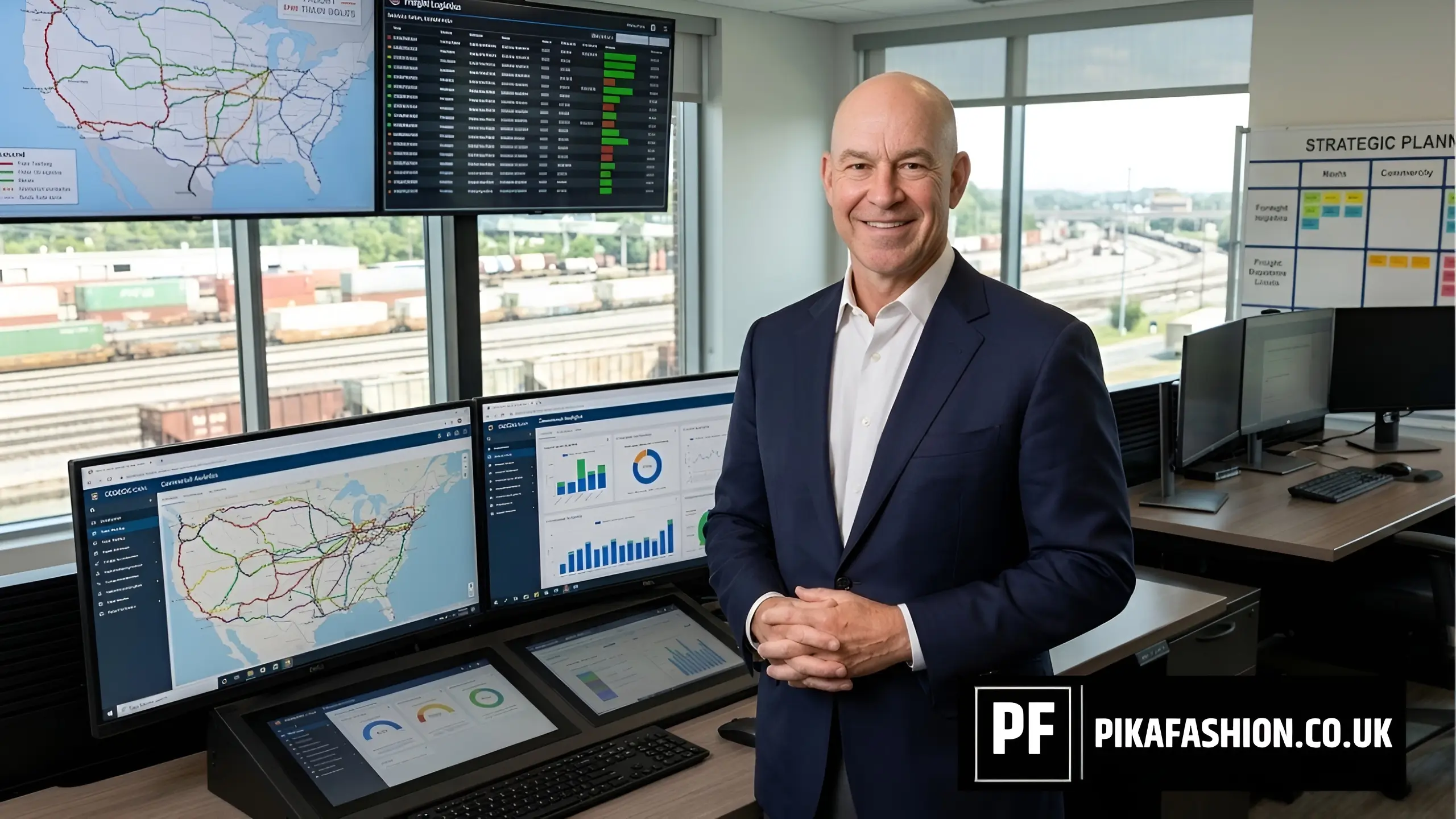
Claude Edward Elkins Jr. represents a transformative figure in contemporary American business leadership. Born in 1966, widely recognized as Ed Elkins, his trajectory through the transportation industry illuminates principles of strategic growth, organizational excellence, and institutional impact. As Executive Vice President and Chief Commercial Officer of Norfolk Southern Corporation (NYSE: NSC), one of the United States’ most significant transportation enterprises, Elkins embodies the sophisticated blend of operational expertise, strategic vision, and market understanding that defines elite modern executives.
His ascent from entry-level railroad operations to the executive suite offers profound insights into professional development, organizational advancement, and the mechanics of sustainable industry leadership. Unlike executives who arrive at senior positions through external hire or academic pathways, Elkins’ organic growth within his organization reveals the depth of institutional knowledge, stakeholder relationships, and comprehensive understanding that emerges from multi-decade commitment to a single enterprise. This foundation shapes his approach to commercial strategy, his relationship with operational realities, and his credibility within an industry that values authentic experience alongside strategic sophistication.
Norfolk Southern Corporation operates within a critical national infrastructure sector, managing transportation networks that connect producers to consumers, facilitate regional commerce, and sustain economic productivity across the continental United States. The company’s Chief Commercial Officer role encompasses responsibility for marketing strategy, sales operations, and commercial supply chain positioning—a complex mandate requiring deep industry understanding combined with sophisticated commercial acumen. Elkins’ tenure in this position has coincided with significant market shifts, technological evolution, and transforming shipper expectations within the transportation sector.
The Foundation: Building Professional Credibility From the Ground
Professional authority emerges from demonstrated expertise across varying organizational contexts. Claude Edward Elkins Jr. began his Norfolk Southern career in 1988 in a position that represents the authentic foundation of railroad operations: Road Brakeman. This role, often overlooked in narratives focused exclusively on executive achievement, provides essential understanding of how transportation systems function operationally, where inefficiencies originate, and how organizational structures either enable or impede day-to-day productivity.
The Road Brakeman position demands rigorous technical competency, safety consciousness, and collaborative problem-solving under operational pressure. Elkins’ decision to begin his career in this role, combined with his commitment to remain within a single organization for over three decades, suggests deliberate professional strategy grounded in institutional loyalty and cumulative knowledge accumulation. Many contemporary executives change organizations multiple times during their careers, acquiring diverse exposure but potentially sacrificing deep institutional understanding. Elkins’ choice reflects confidence in his organization’s development potential and commitment to mastering his chosen sector comprehensively.
The railroad industry itself represents one of America’s essential but frequently underappreciated infrastructure sectors. While automotive transportation and air freight receive public attention, rail networks remain critical for bulk commodity movement, intermodal logistics, and efficiency-scaled transportation. Understanding railroad operations from the operational level—comprehending rail yard dynamics, locomotive operations, scheduling complexity, safety protocols, and operational interdependencies—provides fundamental knowledge that shapes sophisticated commercial decision-making at executive levels.
Throughout his early career tenure, Elkins progressed through increasing responsibility tiers, acquiring expertise across multiple operational and commercial functions. This progression establishes the pattern that would characterize his entire professional trajectory: systematic skill acquisition, demonstrated excellence within assigned roles, and preparation for increasing organizational responsibility. Rather than rapid advancement or strategic job-hopping, Elkins’ path reflects methodical professional development—the approach favored by organizations committed to leadership pipeline development and institutional continuity.
Strategic Ascent: From Operations to Commercial Leadership
Career advancement within large organizations follows recognizable patterns. Individuals demonstrate excellence within assigned responsibilities, build credibility with organizational stakeholders, develop expanding networks across functional areas, and position themselves through visible achievement for increased authority. Elkins’ progression through Norfolk Southern reflected this framework while demonstrating increasingly sophisticated commercial orientation.
His service as Vice President of Industrial Products from 2018 to 2021 marked a significant career inflection point. Industrial products represent a specialized segment within railroad transportation—commodities including chemicals, minerals, metals, and manufactured goods requiring specialized handling, equipment, and logistics coordination. This role required:
- Segment Expertise Development: Comprehensive understanding of industrial customer requirements, market dynamics, competitive positioning, and shipper preferences within specialized freight categories
- Sales and Revenue Responsibility: Direct accountability for revenue generation, customer retention, and market share dynamics within defined segments
- Stakeholder Management: Coordination across operations, sales, customer service, and corporate strategy functions to deliver customer value while maintaining operational efficiency
- Market Analysis: Sophisticated understanding of industrial market trends, customer financial health indicators, and demand forecasting within specialized sectors
The Industrial Products Vice President position functions as a critical development role for executives destined for broader commercial responsibility. Success in this role requires combining operational understanding with commercial sophistication, customer insight with internal stakeholder management, and specific segment expertise with broader strategic thinking. Elkins’ successful tenure in this position laid groundwork for his 2021 elevation to Chief Commercial Officer—the executive position overseeing the entire railroad’s marketing, sales, and commercial strategy functions.
The Chief Commercial Officer: Shaping Transportation Strategy
Appointed to his current role as Executive Vice President and Chief Commercial Officer in 2021, Claude Edward Elkins Jr. assumed responsibility for Norfolk Southern’s complete commercial function during a period of significant industry transformation. The Chief Commercial Officer role encompasses:
Strategic Market Positioning: Determining how Norfolk Southern positions itself within competitive transportation markets, defining value propositions for different customer segments, and shaping public perception of the railroad as a modern logistics provider capable of addressing contemporary shipper requirements.
Sales and Revenue Strategy: Overseeing sales operations, customer acquisition strategies, pricing frameworks, and revenue optimization across freight segments and service offerings. This responsibility directly impacts shareholder value, competitive market position, and organizational financial performance.
Commercial Supply Chain Integration: Coordinating marketing messaging, sales effectiveness, customer experience design, and service delivery consistency to ensure customers perceive Norfolk Southern as a comprehensive transportation solution rather than a commodity freight provider.
Customer Relationship Architecture: Developing customer engagement strategies that strengthen relationships with major shippers, address evolving customer needs, and position Norfolk Southern as a strategic partner rather than a transactional service provider.
Digital Transformation: Driving technological innovation in customer-facing systems, digital pricing platforms, real-time visibility tools, and data analytics capabilities that enable shippers to integrate Norfolk Southern services seamlessly into their supply chain operations.
Transportation Industry Context: Market Dynamics and Strategic Challenges
Claude Edward Elkins Jr.’s tenure as Chief Commercial Officer coincided with fundamental shifts in American transportation markets. Understanding his strategic significance requires contextualizing these industry dynamics:
Intermodal and Specialized Services Growth: Contemporary shippers increasingly demand specialized services including intermodal containers, automotive carrier operations, and integrated logistics solutions rather than traditional bulk freight. Railroads historically focused on bulk commodities have adapted to expand service offerings and address shipper evolution.
Digital Transformation Acceleration: Transportation customers expect real-time visibility, digital pricing tools, mobile accessibility, and integrated data analytics. Railroads previously managed through traditional operational metrics now compete on digital customer experience quality.
Environmental and Sustainability Expectations: Contemporary shippers increasingly prioritize environmental performance, evaluating transportation providers partly through carbon footprint, emissions reduction, and sustainability commitment. Railroads offer inherent efficiency advantages over truck transportation but must articulate this positioning effectively.
Supply Chain Complexity: Global supply chain fragmentation, just-in-time inventory systems, and distributed manufacturing require transportation providers capable of reliability, predictability, and schedule adherence. Traditional railroad advantages in bulk transportation require translation into contemporary supply chain requirements.
Driver and Labor Dynamics: Trucking industry labor constraints, equipment availability limitations, and cost pressures create opportunities for rail transportation. However, railroads must adapt service offerings and operational flexibility to capture share from trucking as carrier costs increase.
As Chief Commercial Officer, Elkins’ strategic imperative involved positioning Norfolk Southern to capitalize on these industry dynamics while maintaining operational excellence and financial performance. His background in industrial products provided insight into shipper requirements, customer relationship dynamics, and market differentiation opportunities—precisely the expertise required to navigate these complex industry shifts.
Professional Background and Military Service
Preceding his corporate career, Claude Edward Elkins Jr. served in the United States Marine Corps, an experience that shaped his professional orientation and personal character. Military service, particularly within the Marine Corps, emphasizes values including leadership accountability, hierarchical respect combined with meritocratic advancement, mission focus, teamwork coordination, and results orientation. These values, consistent with railroad operational culture and large organizational management, provided foundational preparation for his subsequent corporate leadership.
Military veterans entering corporate environments frequently bring advantages including comfort with established hierarchies, clarity about responsibility boundaries, practical understanding of complex organizational coordination, and confidence in high-pressure decision-making. Elkins’ Marine Corps background, combined with his commitment to long-term organizational commitment through his entire Norfolk Southern tenure, suggests alignment between military values and corporate culture within transportation industries.
Expanded Professional Influence: Board Leadership and Industry Positioning
Beyond his primary responsibilities at Norfolk Southern, Claude Edward Elkins Jr. has expanded his professional influence through board service and industry engagement. His role as Vice Chair of the Georgia Chamber of Commerce positions him as a visible business leader within Georgia’s economic environment, particularly the Atlanta metropolitan region where Norfolk Southern maintains significant operations and headquarters presence.
Director positions with respected organizations including the East Lake Foundation, the National Association of Manufacturers, and TTX Company reflect recognition of his business acumen and industry standing. The National Association of Manufacturers represents 14,000 American manufacturing companies, positioning Elkins within conversations about manufacturing competitiveness, supply chain resilience, and transportation infrastructure policy. TTX Company, a AAR-affiliated provider of transportation equipment and pooling services, involves him directly in transportation industry equipment and logistics innovation.
These positions extend beyond typical executive responsibilities, positioning Elkins as an industry thought leader, influential voice in business community conversations, and representative of transportation and manufacturing interests within broader policy discussions. This expanded positioning increases his organizational visibility, expands his professional network beyond Norfolk Southern, and contributes to his recognition as a figure of significance within American business and transportation sectors.
Strategic Commercial Philosophy and Operational Integration
Analysis of Claude Edward Elkins Jr.’s professional trajectory reveals several consistent themes regarding his commercial philosophy and strategic approach:
Operational Excellence as Foundation: Unlike executives who perceive operations and commercial functions as separate organizational domains, Elkins’ career demonstrates conviction that commercial effectiveness requires deep operational understanding. His customer commitments reflect feasibility within operational constraints, and his operational input reflects understanding of customer requirements. This integration strengthens organizational coherence.
Long-Term Relationship Development: Railroad transportation customer relationships, particularly for major shippers, extend across decades. Elkins’ approach emphasizes sustainable customer partnerships rather than transactional commercial optimization, recognizing that shipper loyalty reflects consistent service delivery, predictability, reliability, and fair commercial treatment. This philosophy positions Norfolk Southern for sustained competitive advantage in customer relationships.
Market Segment Specialization: His focused tenure leading Industrial Products before expanding to complete commercial responsibility reflects understanding that specialized expertise generates superior commercial results. Rather than generic approach to all transportation segments, Elkins’ strategy emphasizes tailored value propositions for distinct customer categories with specific requirements, preferences, and competitive dynamics.
Technology-Enabled Customer Experience: Contemporary transportation customers operate with sophisticated logistics systems, real-time visibility expectations, and digital integration requirements. Elkins’ commercial strategy incorporates technology investment in customer-facing systems, digital pricing capabilities, and analytics tools that strengthen competitive positioning while improving customer productivity.
Case Study 1: Industrial Segment Growth and Customer Retention
Consider a scenario illustrating Elkins’ commercial approach within the industrial products segment. A major chemical manufacturer operating across multiple U.S. regions experiences supply chain complexity from distributed manufacturing locations requiring bulk shipment to geographically dispersed customers. Traditional railroad service offerings addressed bulk movement but limited schedule flexibility and customer visibility. The shipper, facing competitive pressure and margin compression, sought transportation providers capable of improving supply chain efficiency while reducing total logistics costs.
Norfolk Southern’s approach under commercial leadership aligned with Elkins’ strategic orientation: Rather than competing primarily on price, the railroad invested in digital visibility platforms enabling the shipper real-time cargo tracking, improved predictability through enhanced scheduling systems, and specialized equipment optimized for chemical products. The commercial team positioned these capabilities not as operational features but as customer productivity improvements—reducing shipper logistics personnel burden, improving cash flow through schedule predictability, and minimizing supply chain disruptions.
Over a three-year engagement, the chemical manufacturer consolidated transportation volumes with Norfolk Southern, moving from divided relationships with multiple carriers to concentrated partnerships. The shipper’s total logistics costs declined despite increased pricing, because operational efficiency improvements generated larger savings than freight cost reductions could provide. Norfolk Southern benefited from consolidated revenue, reduced sales complexity, and long-term customer stability.
This scenario illustrates Elkins’ commercial philosophy: value creation through operational excellence and customer problem-solving rather than price-based competition, emphasis on sustainable customer relationships through demonstrable value delivery, and technology-enabled service differentiation that strengthens competitive positioning.
Case Study 2: Intermodal Service Development and Market Expansion
Transportation markets increasingly demand intermodal services—integrated solutions combining rail, trucking, and specialized equipment. Norfolk Southern traditionally specialized in bulk freight, where intermodal services represented peripheral offerings. Under Elkins’ commercial leadership, the railroad recognized that major shippers increasingly preferred consolidated relationships with transportation providers capable of addressing diverse modal requirements rather than managing separate rail and trucking providers.
The commercial team developed enhanced intermodal offerings, strengthened partnership relationships with trucking providers and shipping lines, and invested in equipment and facilities supporting intermodal operations. Rather than viewing trucking partnerships as competitive threats, Elkins’ commercial strategy positioned intermodal integration as service enhancement—enabling shippers to consolidate relationships while improving supply chain efficiency.
For a manufacturer operating multi-regional production facilities and requiring both bulk commodity transportation and containerized product shipments, Norfolk Southern could now offer comprehensive transportation solutions coordinated through unified commercial teams. This positioning differentiated Norfolk Southern from competitors offering fragmented services requiring multiple vendor relationships.
Intermodal service development required significant infrastructure investment, equipment acquisition, and operational coordination complexity. However, Elkins’ commercial strategy recognized that customers valued consolidated relationships over pure price optimization. This strategic positioning contributed to Norfolk Southern’s competitive differentiation and revenue growth within intermodal segments experiencing significant market growth.
Case Study 3: Shipper Partnership Model and Sustainability Integration
Contemporary corporate shippers increasingly prioritize environmental performance and sustainability commitments, evaluating transportation providers through environmental impact considerations. Rail transportation offers inherent environmental advantages over trucking—greater fuel efficiency per ton-mile, reduced emissions, and lower environmental footprint. However, railroads rarely marketed these advantages explicitly, often assuming customers understood environmental benefits implicitly.
Elkins’ commercial strategy addressed this positioning gap. Norfolk Southern developed shipper partnership programs emphasizing environmental performance, sustainability commitments, and shared goals around emissions reduction. The commercial team engaged major shippers in conversations about transportation environmental impact, carbon footprint reduction opportunities, and alignment between shipper sustainability commitments and transportation provider capabilities.
For a consumer products manufacturer with corporate sustainability targets requiring 30% transportation emissions reduction within five years, Norfolk Southern commercial teams analyzed current transportation patterns, identified opportunities for rail modal shift, and developed service offerings enabling the manufacturer to achieve sustainability goals while maintaining supply chain efficiency. By integrating environmental performance into commercial conversations, Norfolk Southern positioned itself as a strategic partner in customer sustainability achievement rather than a commodity service provider.
This approach addressed multiple strategic objectives simultaneously: strengthened customer relationships through value delivery aligned with customer strategic priorities, differentiated Norfolk Southern’s service offerings in customer perception, contributed to customer sustainability achievement, and aligned commercial strategy with broader transportation industry environmental direction.
Frequently Asked Questions
1. What are Claude Edward Elkins Jr.’s primary responsibilities as Chief Commercial Officer of Norfolk Southern?
As Chief Commercial Officer, Elkins oversees Norfolk Southern’s complete commercial function, including marketing strategy, sales operations, customer relationship management, pricing frameworks, and commercial supply chain coordination. He leads efforts to position Norfolk Southern competitively within transportation markets while maintaining operational excellence and financial performance.
2. How did Elkins’ early career as a Road Brakeman influence his commercial perspective?
Beginning in operational roles provided Elkins comprehensive understanding of railroad operations, customer service delivery mechanics, and operational constraints influencing commercial feasibility. This foundation ensures his commercial strategy reflects operational realities while his operational understanding incorporates customer requirements, creating organizational integration between functions frequently operating in isolation.
3. What distinguishes Elkins’ approach to customer relationships from transactional commercial models?
Elkins emphasizes long-term partnership development, recognizing that railroad customer relationships extend across decades. This philosophy prioritizes sustainable value creation, reliability, and fair commercial treatment over short-term transactional optimization, building customer loyalty and competitive differentiation through demonstrated commitment to customer success.
4. How has Elkins addressed digital transformation within Norfolk Southern’s commercial function?
Elkins has driven significant technology investment in customer-facing systems, digital pricing platforms, real-time visibility tools, and data analytics capabilities. These investments enable customers to integrate Norfolk Southern services seamlessly into their supply chain operations while improving competitive positioning through digital customer experience quality.
5. What role does intermodal service development play in Elkins’ commercial strategy?
Recognizing that contemporary shippers demand consolidated transportation relationships addressing diverse modal requirements, Elkins has emphasized intermodal service development, partnership relationships with trucking and shipping providers, and unified commercial team coordination. This positioning differentiates Norfolk Southern as a comprehensive transportation solution provider.
6. How does sustainability positioning influence Norfolk Southern’s commercial strategy under Elkins’ leadership?
Elkins has integrated environmental performance into commercial conversations, developing partnership programs emphasizing emissions reduction, sustainability commitments, and environmental advantage. This positions Norfolk Southern as a strategic partner in customer sustainability achievement while capitalizing on rail transportation’s inherent environmental advantages.
7. What distinguishes Norfolk Southern’s competitive positioning within railroad transportation markets?
Norfolk Southern operates as one of America’s premier transportation companies, serving diverse customer segments including industrial products, chemicals, minerals, automotive, and intermodal services. Under Elkins’ commercial leadership, the railroad emphasizes specialized service offerings, technology-enabled customer experience, and partnership relationships creating value beyond price-based competition.
8. How does Elkins’ military background influence his leadership approach?
Marine Corps service instilled values including leadership accountability, organizational clarity, teamwork coordination, and results orientation. These values align well with railroad culture and large organizational management, providing foundation for his emphasis on operational discipline, customer commitment, and organizational excellence.
9. What commercial challenges has Elkins addressed during his tenure as Chief Commercial Officer?
Elkins has navigated significant industry challenges including trucking industry labor constraints creating competitive opportunities for rail, digital transformation acceleration requiring customer-facing technology investment, supply chain complexity requiring service offering expansion, and sustainability integration increasingly important to shipper decision-making.
10. How does Elkins’ industrial products background prepare him for broader commercial responsibility?
Leadership within industrial products required specialized expertise, sales accountability, customer relationship management, and stakeholder coordination across operations and corporate strategy functions. This specialized experience provided development foundation for broader commercial responsibility encompassing all customer segments and service offerings.
11. What role do board positions extend to Elkins’ professional influence?
Service as Vice Chair of the Georgia Chamber of Commerce and director positions with the East Lake Foundation, National Association of Manufacturers, and TTX Company extend Elkins’ professional influence beyond Norfolk Southern, positioning him as an industry thought leader and business community representative in broader policy discussions.
12. How does Norfolk Southern’s commercial strategy address evolving shipper requirements?
Under Elkins’ leadership, commercial strategy emphasizes tailored value propositions for distinct customer segments, technology-enabled service differentiation, partnership-based relationship development, operational excellence as competitive foundation, and integration with broader organizational strategy. This comprehensive approach positions Norfolk Southern to address evolving shipper requirements while maintaining competitive advantage.
For More Visits: Pika Fashion
Also Read: irobux.com Redeem: Ultimate 3-Step Currency Guide