
Finding the right artist can be surprisingly difficult. The internet contains countless paintings, portfolios, social media profiles, galleries, marketplaces, and creative communities, yet having more choices does not always make the search easier. What people often need is a clear starting point where artists can be explored in an organized way.
The arcyart artists directory is designed around that basic idea: making artist discovery more straightforward by bringing artist information and creative work into a directory-style environment. Publicly available ArcyArt pages describe the platform as an online art resource featuring artist profiles, artwork, and art-related information, with directory browsing that can help visitors explore artists by name and medium.
For an artist, a directory can be more than another place to display a name. A well-prepared listing can act as an introduction, a portfolio gateway, and a professional contact point. For collectors, students, curators, galleries, designers, and ordinary art enthusiasts, a directory can make the process of discovering unfamiliar creative voices much more manageable.
This detailed guide explains how to approach the arcyart artists directory, what information matters when exploring an artist, how artists can make their profiles more useful, and how to turn a simple directory visit into meaningful art discovery.
What Is the ArcyArt Artists Directory?
The ArcyArt Artists Directory can be understood as an organized online resource for exploring artists and their work. Instead of depending entirely on social media algorithms or random search results, visitors can use a directory structure to begin with artist names, artistic disciplines, or related information.
The value of this structure is simplicity. A person who already knows an artist’s name may want to find more information about that artist. Another visitor may have no particular name in mind and simply want to browse. A directory can support both behaviors.
ArcyArt’s publicly available directory material describes artist listings that may include information such as artwork, biographical details, artistic mediums, and ways to make contact. The platform also presents artist directories covering South African and international artists.
That combination makes the concept useful for several different audiences. An emerging painter can gain another professional discovery point, while someone looking for a particular type of artist can use the directory as part of a broader research process.
The important thing to understand is that an artist directory should not be treated as a replacement for looking at an artist’s actual portfolio. Instead, it should be viewed as the beginning of a deeper evaluation.
A directory entry answers questions such as:
- Who is this artist?
- What medium or discipline do they work in?
- What kind of artwork do they create?
- Where can I see more of their work?
- How can I learn about their background?
- How can I contact them?
Once those questions have been answered, the visitor can continue researching the artist through portfolios, exhibitions, interviews, social profiles, galleries, or direct communication.
Why Artist Directories Still Matter in a Social Media World
It may seem that social media has made artist directories unnecessary. Artists can publish artwork instantly, create reels, post studio videos, and communicate directly with audiences. However, social platforms and directories serve different purposes.
Social media is often built around continuous content. A user’s attention moves quickly from one post to another. Older artwork can disappear beneath newer posts, and finding a particular artist months later may require considerable searching.
A directory, on the other hand, is structured around discoverability.
Imagine someone searching for an artist who specializes in portrait painting. They may encounter thousands of social media posts, many of which provide little context. A directory-style profile has the opportunity to organize that information in one place.
This matters because art discovery is not always impulsive. A collector may research an artist for several days before making contact. A curator may compare dozens of portfolios. A student may investigate artists working in a particular medium. A business may look for an illustrator for a future project.
Directory pages can serve these longer research journeys.
The arcyart artists directory therefore has a practical purpose beyond simply listing names. It can become part of the research stage where visitors identify artists, understand their creative direction, and decide which portfolios deserve closer attention.
Who Can Benefit From the ArcyArt Artists Directory?
One of the strongest features of an artist directory concept is that it serves more than one type of visitor.
Art Collectors
Collectors often have specific preferences. They may be interested in landscapes, portraits, abstract work, contemporary pieces, traditional techniques, sculpture, photography, or digital art.
Rather than selecting artwork purely because an image appears attractive, collectors can use artist profiles to learn more about the person behind the work. The artist’s biography, medium, creative approach, portfolio, and professional information can all contribute to a more informed decision.
A directory can also help collectors discover artists they would not normally encounter.
Galleries and Curators
Galleries and curators are constantly researching artists. They need to understand an artist’s body of work, consistency, subject matter, medium, and professional background.
An artist directory can function as an initial discovery tool. A curator may begin with a broad search and gradually narrow the field based on artistic relevance.
The important point is that a directory does not make the final decision for a gallery. It simply makes the first stage of discovery more efficient.
Students and Art Researchers
Students can benefit from structured access to artist information because research often begins with discovery.
A student studying portraiture, abstract art, sculpture, or photography may want to see how different artists approach the same discipline. Browsing artist profiles can help create a broader understanding of contemporary creative practices.
Students should still verify important academic information through appropriate scholarly or institutional resources when writing formal assignments.
Interior Designers and Creative Professionals
Interior designers often need artwork that matches a space rather than simply a particular artist’s popularity.
A designer may look for:
- A large-format landscape.
- A minimal abstract composition.
- A colorful statement piece.
- Local artistic perspectives.
- A commission-based artist.
- Artwork that complements a particular interior concept.
The directory can be an efficient starting point before direct discussions about size, budget, timelines, licensing, or commissions.
Emerging Artists
Artists benefit from directories because discovery is one of the hardest parts of building a creative career.
An artist may have excellent work but limited exposure. A carefully presented directory profile gives potential viewers another route to discover that work.
This does not guarantee commissions or sales. Instead, it creates another professional point of visibility that can support the artist’s broader online presence.
How to Explore the ArcyArt Artists Directory Effectively
The biggest mistake visitors can make is browsing without a purpose.
A better approach is to decide what you are trying to find.
Are you looking for a particular artist?
Are you searching for a specific medium?
Are you interested in emerging creators?
Are you comparing artists for a commission?
Are you researching a particular artistic tradition?
Once the purpose is clear, directory browsing becomes much more efficient.
Public ArcyArt directory pages describe alphabetical organization and browsing by artist information, while other ArcyArt material discusses discovering artists through areas such as medium and artistic category.
Start With the Artist’s Name
When you already know the artist you want to research, begin with the name rather than browsing randomly.
Review the artist’s profile carefully. Look beyond the first image.
Ask:
What subjects appear repeatedly?
Does the artist work in one medium or several?
Is the style consistent?
Does the biography explain the artist’s development?
Are there enough examples of work to understand the broader portfolio?
Does the profile give you a clear next step for learning more?
This approach turns a simple name search into meaningful research.
Browse by Medium
Medium is one of the most useful ways to narrow an art search.
Painting, drawing, sculpture, photography, illustration, mixed media, and digital art can require very different technical approaches. Even within a single discipline, the materials and methods can vary significantly.
For example, two artists may both be painters, yet one may focus on detailed realism while another creates expressive abstract compositions.
Looking at medium first can therefore help visitors build a more relevant shortlist.
Explore Beyond Familiar Names
Another advantage of directory browsing is discovery.
People naturally search for artists they have already heard about. A directory can encourage a different behavior: discovering artists without beginning with an established reputation.
That matters especially for people who care about originality and want to explore less familiar creative voices.
An emerging artist may not have the same visibility as a well-established name, but their portfolio could still be highly relevant to a particular collector, designer, or curator.
How to Evaluate an Artist Profile
Seeing attractive artwork is only the first step.
A professional evaluation should consider the entire artist profile.
Review the Portfolio
Look for range and consistency.
A strong portfolio should make it possible to identify the artist’s creative direction. You should be able to see recurring choices in composition, subject matter, technique, color, texture, or concept.
Do not judge an entire career from one image.
One artwork may be experimental. Another may represent the artist’s main style. A wider selection provides better context.
Read the Biography
The biography helps connect the artwork to the person creating it.
A useful artist biography does not need to become an autobiography. The best profiles generally explain the artist’s background, creative interests, approach, and areas of practice in a way that is easy for visitors to understand.
For collectors and professional contacts, this context can make an artist much more memorable.
Consider the Artist’s Medium
The medium matters for both aesthetics and practicality.
A buyer interested in original oil paintings, for example, may have completely different requirements from someone searching for digital illustrations.
Understanding the medium also helps people ask better questions later about:
- Framing.
- Preservation.
- Printing.
- Shipping.
- Installation.
- Licensing.
- Reproduction.
- Commission requirements.
Look for Professional Contact Information
If an artist invites professional inquiries, the contact route should be clear.
Potential clients should not have to guess how to reach the artist.
At the same time, visitors should respect the artist’s preferred contact method and avoid sending unnecessary or vague messages.
How Artists Can Create a Strong Directory Profile
A directory profile should work like a professional introduction.
The objective is not to fill every possible field with text. The objective is to give visitors enough useful information to understand the artist quickly and encourage them to explore further.
Write a Clear Artist Introduction
The first paragraph should explain who you are and what you create.
Avoid vague statements such as:
“I have always loved art and express myself through creativity.”
That sentence may be true, but it tells a potential visitor very little.
A stronger introduction might explain the artist’s medium, subject matter, approach, and creative focus.
For example:
“Based in Cape Town, contemporary painter Nadia Khan creates expressive urban landscapes using layered acrylic textures and bold architectural forms.”
That sentence immediately establishes identity, location, medium, subject, and style.
Use Specific Language
Specific descriptions are easier to understand than generic artistic language.
Instead of saying:
“My work explores many concepts.”
Explain which concepts.
“My recent series explores memory, migration, and the relationship between personal identity and urban space.”
The second version provides an actual reason for the visitor to continue reading.
Showcase Your Best Work First
A directory visitor may not browse dozens of images.
Put your strongest work where it has the greatest chance of being noticed.
The first few images should represent the artist accurately.
Avoid choosing artwork simply because it is the newest. Choose work that best communicates artistic quality and direction.
Maintain Consistency
If your portfolio shows six completely unrelated styles, visitors may struggle to understand your professional identity.
Experimentation is completely valid, but the profile should still provide a coherent picture of the artist.
This does not mean every artwork needs to look identical.
It means there should be enough consistency for a visitor to understand the artist’s core practice.
Why High-Quality Images Matter
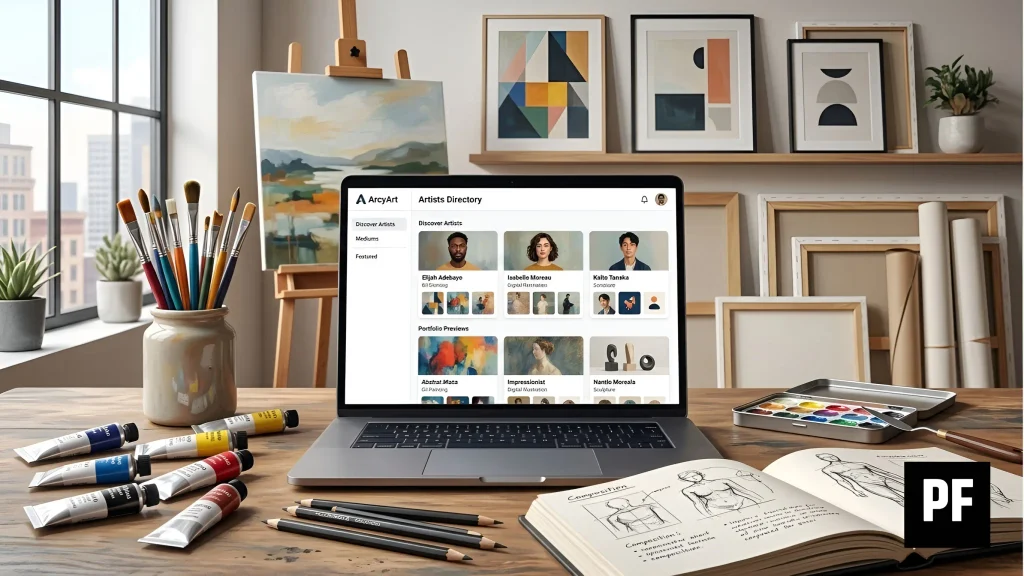
Art is visual, so image quality has an enormous influence on the usefulness of a directory profile.
A poorly photographed painting can appear flat, dull, or distorted even when the original work is exceptional.
Artists should pay attention to:
- Lighting.
- Focus.
- Straight alignment.
- Accurate color.
- Clean backgrounds.
- Appropriate cropping.
- Image resolution.
- Consistent presentation.
For physical artwork, avoid visible glare and distracting shadows where possible.
For digital artwork, use clean exports that show detail without unnecessary compression.
A visitor should be able to focus on the artwork rather than the limitations of the photograph.
Building Trust Through Accurate Information
Trust is particularly important in art.
A potential buyer may be considering a valuable original piece or commissioning an artist for a custom project. The profile therefore needs to communicate professionalism without exaggeration.
Avoid unsupported claims such as:
“Best artist in the country.”
“Most famous painter online.”
“Number one contemporary artist.”
These claims do not help a visitor evaluate the work.
More useful information includes actual details about the artist’s practice, exhibitions, education where relevant, artistic medium, project experience, or creative specialization.
The strongest profile is usually the one that allows the artwork and professional history to speak for themselves.
Using the Directory for Artist Discovery
A visitor can make the discovery process easier by creating a shortlist.
Instead of contacting the first artist who looks interesting, identify several profiles that appear relevant.
Then compare them based on the actual needs of the project.
For example, imagine that a restaurant owner wants original artwork for a large dining area. The selection process might look like this:
First, search for relevant artists.
Next, identify artists whose work matches the restaurant’s visual identity.
Then examine portfolio consistency.
After that, review location, communication options, and project suitability.
Finally, contact a small number of artists with the same project brief.
This process makes the comparison fairer and more productive.
How Collectors Can Compare Artists Without Relying on Popularity
Popularity can be tempting, but it is not the same thing as suitability.
A lesser-known artist can create a piece that is far better suited to a collector’s needs than an artist with greater online visibility.
When comparing profiles, consider:
Artistic fit: Does the work appeal to your personal taste?
Technical fit: Does the artist work in the medium you require?
Scale: Does the artist create work appropriate for your available space?
Subject: Does the artist’s subject matter fit your intended setting?
Communication: Does the artist provide a clear way to discuss the project?
Professional information: Is enough background available to make an informed inquiry?
These questions encourage thoughtful selection without reducing art to a popularity contest.
Using ArcyArt for Commission Research
Commissioning art is different from purchasing an existing piece.
A commission often requires discussion about:
- Size.
- Medium.
- Concept.
- Number of revisions.
- Timeline.
- Materials.
- Shipping.
- Installation.
- Payment schedule.
- Copyright or reproduction rights.
The directory can help you identify artists whose existing work resembles what you need.
Once you have found a suitable artist, the next step should be direct communication.
A strong first message should be specific.
Instead of:
“Can you make me a painting?”
Write something like:
“Hello, I am interested in commissioning a 36-by-48-inch landscape painting for a living room. I am looking for a warm, contemporary style and would like to know whether you are accepting commissions during the next few months.”
That type of message makes it much easier for an artist to respond professionally.
How Artists Can Improve Their Chances of Being Discovered
Being listed is only the beginning.
An incomplete artist profile can easily be overlooked.
Artists should periodically review their listing and ask whether a new visitor would understand their work within a few minutes.
A useful profile should answer:
Who are you?
What do you create?
What medium do you use?
What subjects interest you?
What makes your artistic approach distinctive?
Where can visitors see more work?
How can professional inquiries reach you?
When these questions are answered clearly, visitors can move through the discovery process without unnecessary confusion.
The Role of Artist Bios in Online Discovery
An artist biography serves two audiences.
The first is the human visitor.
The second is the broader information ecosystem surrounding online content.
A well-written biography gives context to artwork. It also creates opportunities to naturally describe relevant concepts such as:
- Contemporary painting.
- Portraiture.
- Landscape art.
- Digital illustration.
- Sculpture.
- Abstract art.
- Mixed media.
- Photography.
The key is natural language.
Artists should never turn a biography into a collection of repeated keywords. Writing “abstract artist abstract art abstract painting abstract artwork” repeatedly makes the text less professional and less useful.
Instead, explain the actual practice.
“For more than a decade, the artist has explored abstract painting through layered pigments, geometric forms, and gestural brushwork.”
That sentence contains meaningful context without sounding artificial.
Common Mistakes Visitors Make
Even a useful artist directory can be used poorly.
One common mistake is making a decision from a single artwork.
Another is ignoring the artist’s biography.
A third is contacting an artist without a clear idea of what the project requires.
A fourth is assuming that an online listing guarantees quality.
Directories are discovery tools. Visitors still need to do their own evaluation.
For important purchases or commissions, it is sensible to request additional information where appropriate. Ask about availability, prices, materials, dimensions, expected completion time, shipping, and any contractual terms before committing.
Common Mistakes Artists Make
Artists can also reduce the effectiveness of their listings through avoidable mistakes.
One of the most common is using extremely low-quality images.
Another is writing an overly long biography that never explains what the artist actually creates.
Some artists list every experiment they have ever attempted, making it difficult to identify their main practice.
Others fail to update old information.
A directory profile should be treated as a living professional asset.
Review it periodically.
Replace weaker portfolio images.
Update the biography when your practice changes.
Add significant professional developments where appropriate.
Make sure contact information remains accurate.
Case Study 1: An Emerging Painter Building Visibility
Consider a fictional emerging painter named Sara.
Sara has spent several years developing a recognizable approach to contemporary landscape painting. Her social media account contains good artwork, but her posts are mixed with personal updates, studio photographs, and unrelated content.
A visitor who discovers one painting may struggle to understand Sara’s overall practice.
Sara creates a focused artist directory profile.
She selects twelve portfolio pieces that represent her strongest work. She writes a concise biography explaining her interest in urban landscapes and natural light. She clearly identifies her medium and provides a professional contact route.
Now a person discovering Sara through the directory has a clearer picture of her work.
Nothing about the listing guarantees sales.
The improvement comes from reducing uncertainty.
The visitor can understand the artist faster, evaluate the portfolio more easily, and decide whether to continue the conversation.
Case Study 2: A Designer Searching for Art for a Commercial Space
Imagine a fictional interior designer named Daniel who is preparing a boutique hotel.
Daniel needs original artwork with a modern aesthetic. He does not need one particular artist; he needs several artists whose styles can work across different areas of the property.
Instead of searching for artwork one image at a time, he uses a directory as a discovery starting point.
He creates a shortlist.
Then he evaluates each artist based on artistic style, medium, portfolio consistency, and ability to communicate about a professional project.
Daniel contacts a smaller group with a detailed brief.
The directory does not make the design decision. It simply helps Daniel get from “I need artwork” to “These artists are worth researching.”
That distinction is important.
Case Study 3: A Collector Discovering an Artist Outside the Mainstream
A fictional collector named Michael typically purchases art from familiar names.
During an exploratory session, he browses directory listings without searching for a specific artist.
He discovers an artist whose work combines figurative painting with abstract backgrounds.
At first, Michael knows very little about the artist.
He explores the portfolio, reads the biography, studies several works, and eventually visits the artist’s main portfolio site.
He then reaches out with questions about available works.
The value here is discovery.
Without browsing beyond familiar names, the artist might never have entered Michael’s consideration set.
How the ArcyArt Artists Directory Can Support Different Search Intent
A strong content strategy around the keyword arcyart artists directory should recognize that users arrive with different intentions.
Some have informational intent.
They want to know what the directory is.
Others have navigational intent.
They are trying to locate the directory or a particular artist.
Some have research intent.
They want to compare artists, styles, or mediums.
Others may have professional intent.
They could be looking for an artist to commission or collaborate with.
This is why useful content should not simply repeat the same keyword.
It should answer the questions people naturally ask around the topic.
For example:
“What is the ArcyArt Artists Directory?”
“How do I find an artist on ArcyArt?”
“What information should an artist profile contain?”
“How can collectors research artists?”
“What should I ask before commissioning artwork?”
These questions create a natural connection between the main keyword and related search topics.
ArcyArt Artists Directory for Emerging and Established Artists
A directory can support artists at different stages of their careers.
Emerging artists may benefit from discoverability.
Mid-career artists may use directories to maintain professional visibility.
Established artists can use structured profiles as another informational reference point.
The important thing is presentation.
A professional directory profile should reflect the artist’s current status without exaggeration.
An emerging artist should not feel pressure to imitate the profile of a globally recognized artist. Instead, they should focus on providing accurate, useful information and presenting their work as clearly as possible.
Why Niche Artist Discovery Can Be Valuable
Broad searches can produce overwhelming amounts of information.
Niche directories have the potential to reduce that noise by giving visitors a more focused environment.
Someone interested in visual art may spend hours searching general websites and social networks.
A dedicated artist directory creates a different experience because the visitor enters with the expectation of finding creative professionals.
That context changes how information is consumed.
Instead of asking, “Is this post interesting?”
The visitor is more likely to ask:
“Is this artist relevant to what I am looking for?”
That is a much more useful question.
A Practical Workflow for Using the Directory
A simple workflow can make research more efficient.
Start by defining the purpose of your search.
Then identify artists who appear relevant.
Review their profiles and portfolios.
Create a shortlist.
Compare the artists based on your actual requirements.
Visit their broader professional presence where necessary.
Prepare clear questions.
Then begin direct communication.
For artists, reverse the process.
Define your professional identity.
Prepare your strongest portfolio work.
Write a useful biography.
Provide accurate contact details.
Review the listing from a visitor’s perspective.
Update it over time.
This workflow keeps the directory useful for both sides of the art ecosystem.
How to Write a Better Artist Profile
A strong artist profile does not need complicated language.
A simple structure can be highly effective:
Introduction: Who the artist is and what they create.
Practice: Medium, subject matter, themes, and approach.
Background: Relevant professional or artistic experience.
Portfolio: Selected examples demonstrating the work.
Contact: A clear route for serious inquiries.
The profile should be readable on both desktop and mobile screens.
Long paragraphs can be divided into shorter sections where appropriate.
Important information should be easy to find.
The artist’s name should be clear.
The artistic medium should be obvious.
The work itself should remain the visual focus.
SEO Considerations for Content About Artist Directories
When publishing content targeting arcyart artists directory, natural writing matters more than repetition.
The keyword can appear in important locations such as the title, introduction, one or two subheadings, and relevant sections.
However, the article should also use related terms naturally.
Examples include:
- Artist directory.
- ArcyArt directory.
- ArcyArt artists.
- Online artist directory.
- Artist portfolio.
- Emerging artists.
- International artists.
- Visual artists.
- Contemporary art.
- Art discovery.
These phrases should appear because they help explain the topic, not because every paragraph needs a keyword.
Search engines increasingly need context to understand a page. A page that genuinely answers related questions is more useful than a page that repeats one phrase dozens of times.
Why Originality Matters in Art Directory Content
Art is fundamentally about individual expression, and content surrounding art should feel equally authentic.
A generic article may describe an artist directory as “the ultimate platform,” “the best solution,” and “a revolutionary destination” without offering anything useful.
That style may create excitement, but it does not answer practical questions.
Useful content should provide substance.
Readers should leave the page knowing how to search, how to compare profiles, what information matters, and how to communicate professionally with artists.
That is the type of content people can return to later.
Questions to Ask Before Contacting an Artist
Once you have found a promising artist, a thoughtful inquiry can save both sides time.
Before contacting the artist, establish your own requirements.
Know the approximate size.
Know where the artwork will be used.
Know your preferred style or visual direction.
Know your approximate timeline.
Know whether you want an original, print, or commissioned work.
For commercial projects, understand whether licensing or reproduction rights may be required.
The clearer the brief, the easier it becomes for the artist to determine whether the project is a good match.
Questions Artists Should Ask Potential Clients
Artists should also evaluate the project.
A client inquiry should ideally answer several basic questions.
What exactly is being requested?
What is the intended use?
What is the desired size?
What is the deadline?
What budget range has been considered?
Who will own the final physical artwork?
Will reproduction rights be involved?
Will shipping or installation be required?
These questions are particularly important for commissioned work.
A directory can begin the relationship, but professional project terms should be discussed directly and documented clearly.
Understanding the Difference Between Discovery and Buying
One of the most important concepts in artist-directory research is the difference between discovering an artist and buying artwork.
Discovery is about identifying possibilities.
Buying involves a much more detailed decision.
A directory may help you discover an artist today, but that does not mean you should immediately purchase artwork without additional research.
For significant purchases, consider the complete context, including the specific artwork, condition, provenance where relevant, price, payment arrangements, shipping, and return or cancellation terms.
For commissions, discuss timelines and expectations before work begins.
The directory is the starting point, not the entire transaction.
Frequently Asked Questions About the ArcyArt Artists Directory
Q1: What is the ArcyArt Artists Directory?
A: The ArcyArt Artists Directory is an online directory-style resource focused on artist discovery and art-related information. Public ArcyArt pages describe artist listings containing information about artists and their work, with directory browsing designed to make discovery easier.
Q2: Who can use the ArcyArt Artists Directory?
A: The directory can be useful for a wide range of visitors, including art enthusiasts, collectors, students, galleries, curators, designers, and artists who want to present their work online.
Q3: Can I use the directory to discover new artists?
A: Yes. One of the main reasons people use artist directories is to discover creators they may not already know. Browsing beyond familiar names can reveal artists working in different styles, subjects, and mediums.
Q4: What information should I look for in an artist listing?
A: Look for the artist’s name, biography, medium, portfolio, artistic focus, professional background, and contact information. The more relevant information available, the easier it is to decide whether an artist deserves further research.
Q5: Is the directory useful for emerging artists?
A: An artist directory can provide an additional discovery channel for emerging artists. A well-prepared profile can make it easier for visitors to understand an artist’s work and continue to their wider portfolio.
Q6: How should artists choose images for their profile?
A: Artists should generally choose clear, high-quality images that accurately represent their strongest work. A portfolio should demonstrate the artist’s actual creative direction rather than simply showing random pieces.
Q7: Should an artist repeat keywords in their biography?
A: No. Keywords should be used naturally. An artist biography should first be written for human readers and should clearly explain the artist’s creative practice.
Q8: Can collectors rely only on a directory profile?
A: For basic discovery, a directory profile can be useful. For significant purchases or commissions, additional research is sensible. Visitors should review the specific artwork and discuss relevant terms directly with the artist or authorized seller.
Q9: What should I ask before commissioning artwork?
A: Discuss the concept, dimensions, medium, price, timeline, revisions, delivery, payment arrangements, and rights relating to reproduction or commercial use where applicable.
Q10: How can I compare several artists?
A: Create a shortlist and compare them based on artistic style, medium, portfolio quality, relevance to your project, communication, availability, and other practical requirements.
Q11: Why is an artist biography important?
A: A biography provides context. Artwork can show what an artist creates, while the biography can explain the background, interests, themes, and creative direction behind that work.
Q12: What makes an online artist profile professional?
A: A professional profile is clear, accurate, well written, visually strong, and easy to navigate. It gives visitors enough information to understand the artist without overwhelming them.
Q13: Is an artist directory the same as an art marketplace?
A: Not necessarily. A directory primarily focuses on discovery and artist information, while a marketplace may include direct purchasing, checkout, payment processing, and transaction features. The exact functions of a particular platform should always be checked on the platform itself.
Q14: Why should artists keep their directory profiles updated?
A: Outdated information can create confusion. Regular updates help ensure that biographies, portfolio images, contact details, and professional information accurately reflect the artist’s current work.
Q15: Can designers use an artist directory for commercial projects?
A: Yes, a directory can be a practical starting point for identifying artists whose styles fit commercial environments. Before hiring an artist, the designer should discuss project requirements and commercial-use terms directly.
Q16: What is the biggest benefit of an artist directory?
A: The central benefit is organized discovery. Instead of encountering artists entirely by chance, visitors have a structured way to explore creative professionals and decide whom to research further.
Final Thoughts on the ArcyArt Artists Directory
The internet has made artwork more accessible than ever, but accessibility does not automatically create good discovery. When thousands of artists are publishing work across different platforms, people need ways to organize their search and understand what they are seeing.
The arcyart artists directory offers a directory-based approach to that challenge. Its public material emphasizes artist discovery through organized listings and artist information, including profiles and artwork that can help visitors learn about creative professionals.
For visitors, the best approach is to use a directory as the beginning of research. Explore artists with an open mind, compare portfolios thoughtfully, read biographies, and ask practical questions before entering into a purchase or commission.
For artists, the opportunity is equally straightforward: treat your profile as a professional introduction. Use strong images, clear writing, accurate information, and a portfolio that communicates what you genuinely do.
The most valuable artist directories are not simply lists of names. Their real purpose is connection. They help a curious visitor move from searching to discovering, from discovering to understanding, and from understanding to meaningful contact.
That is ultimately what makes the ArcyArt Artists Directory an interesting resource for anyone who wants to explore the world of visual art in a more organized and intentional way.
For More Visits: Pika Fashion
Also Read: Retro Bowl 3kh0: Complete Guide, Gameplay & Tips