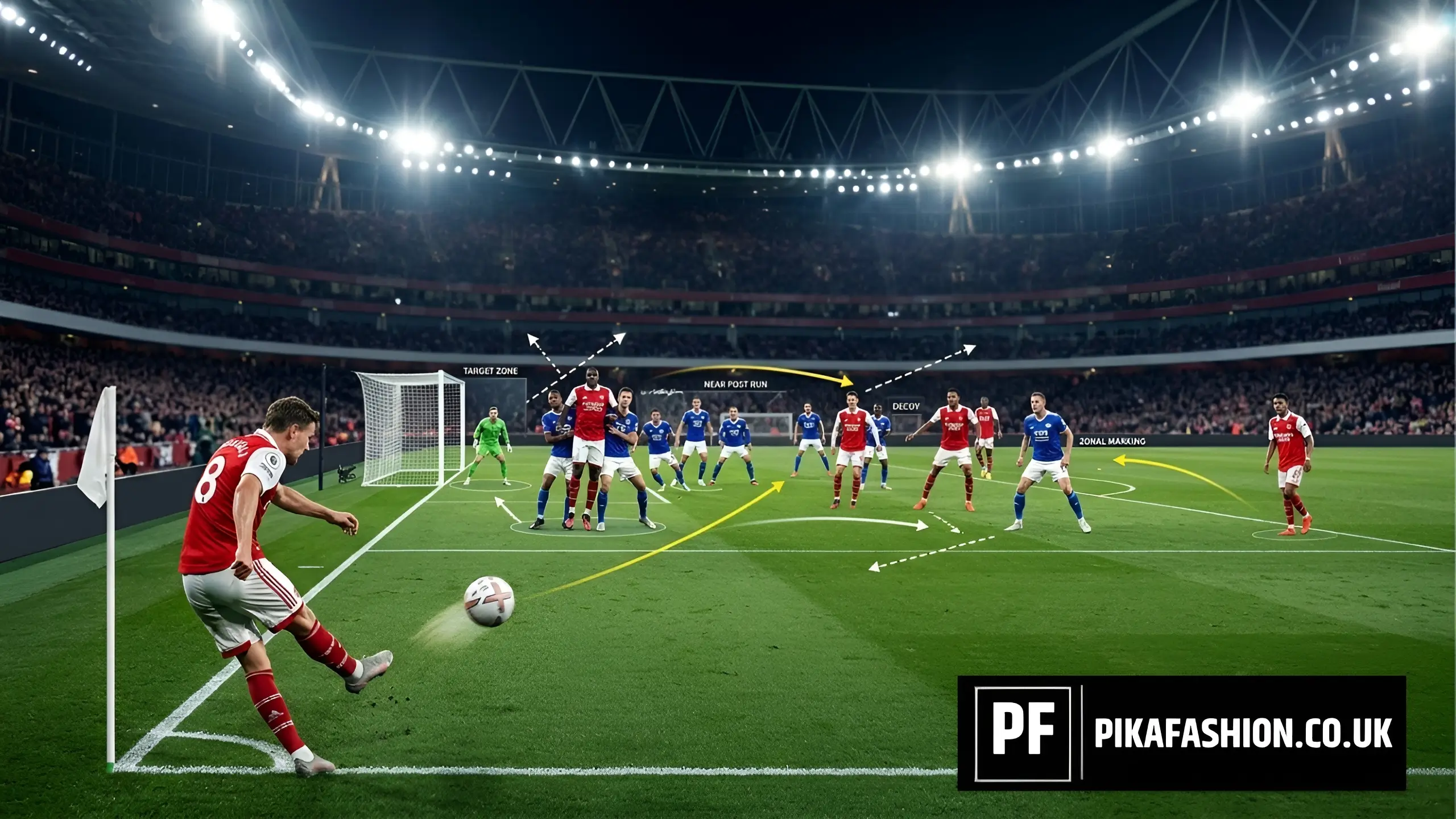
In modern football, set pieces have become a crucial aspect of match strategy. Teams that master the art of corner kicks gain a significant competitive advantage, and the Cincinnati Reds have become exemplary in demonstrating how systematic corner exploitation can transform match outcomes. The ability to reds exploit corner situations showcases the evolution of tactical football, where precision, timing, and strategic positioning directly influence scoring opportunities and match control.
Corner kicks represent one of the most predictable yet complex scenarios in football. When a team reds exploit corner effectively, they’re not relying on luck or individual brilliance alone. Instead, they’re implementing carefully choreographed movements, understanding defensive vulnerabilities, and executing plays that have been refined through countless training sessions. This article explores the multifaceted strategies that enable modern football teams to maximize their corner kick potential.
The Evolution of Corner Kick Strategy
Corner kicks haven’t always received the tactical attention they deserve. Historically, teams would simply send a tall striker to the near post and hope for the best. However, the modern era has transformed corner kicks into a sophisticated branch of football strategy. The way professional teams reds exploit corner now involves data analysis, video study, and player specialization.
The Cincinnati Reds organization has embraced this evolution with particular enthusiasm. Their coaching staff recognized that corners represent roughly 15-20% of all goalscoring opportunities in professional football. This statistic alone justifies the investment in developing comprehensive corner strategies. Teams that neglect corner preparation are essentially leaving goals on the table.
The transition from basic to advanced corner tactics required several fundamental changes in how coaches approached player selection and training. Teams now assign specific roles to players during corners-designated flickers, runners, and shooters work in concert to create scoring opportunities that individual talent alone cannot produce. When we observe how reds exploit corner situations, we’re witnessing the result of this strategic evolution.
Understanding Defensive Vulnerabilities
To effectively reds exploit corner, teams must first understand how defensive structures are weakened during set pieces. During open play, defenders maintain compact formations and communicate constantly. Corner kicks, however, create unique defensive challenges that present opportunities for attacking teams.
The first vulnerability exists in the crowding of the penalty area. When a corner is being taken, both teams pack numerous players into a relatively small space. This creates zones where defenders lose sight of their assignments momentarily. The team that reds exploit corner most effectively trains their attacking players to find these blind spots and exploit them decisively.
Key Defensive Vulnerabilities During Corners:
- The back post gap: The far side of the goal often becomes exposed during initial defensive positioning
- Following movement confusion: When attackers make coordinated runs, defenders struggle to maintain their man-marking responsibilities
- Aerial dominance shifts: The team with better positioning sometimes gains an unexpected aerial advantage despite not having taller players
- Second phase opportunities: Even when the initial cross is cleared, quick attacking transitions can catch defenders off-balance
- Communication breakdowns: With multiple players converging on the ball, verbal coordination becomes difficult
Teams that successfully reds exploit corner have invested time in identifying and training players to recognize these vulnerabilities. This requires more than just aerial ability-it requires spatial awareness, timing, and understanding of defensive patterns.
The Tactical Framework Behind Corner Exploitation
The Cincinnati Reds’ approach to corner tactics demonstrates a structured framework that goes beyond simple execution. This framework includes pre-match analysis, player positioning, movement coordination, and contingency plans.
Pre-Match Analysis and Intelligence
Before a match, coaching staff analyze opponent defensive structures during corner kicks. They study video footage to identify which defenders prefer marking space versus marking man, where communication breaks down, and which areas of the penalty box remain consistently underdefended. This intelligence gathering is crucial for teams that reds exploit corner with consistent success.
Analysts examine:
- Opposition goalkeeper’s distribution patterns and positioning
- Common defensive alignments during different corner scenarios
- Individual defender positioning habits and strengths
- How opposition fullbacks contribute to corner defense
- Recovery mechanisms when initial defensive efforts fail
Player Selection and Specialization
The effectiveness of corner strategies depends heavily on having the right players for specific roles. When teams reds exploit corner successfully, they’re often utilizing specialized set-piece players whose strengths directly align with corner requirements.
Teams now employ dedicated corner kick takers who possess specific attributes-typically combining accuracy with the ability to curl or drive the ball into dangerous areas. These specialists may not be regular starters in open play but represent essential components of a complete squad. Similarly, teams employ attackers who excel in positioning, timing, and finishing from set pieces.
The tactical innovation extends to midfielders who contribute to corner attacks in unexpected ways. Rather than simply positioning themselves for a direct flick-on, modern midfielders move into attacking positions where they can receive the ball on the ground, creating second-phase opportunities that traditional corner tactics never anticipated.
The Primary Corner Patterns That Reds Exploit
Different corner situations call for different tactical responses. Teams that reds exploit corner most effectively rotate between several established patterns, preventing opponents from predictably defending a single approach.
The Near Post Short Corner
Rather than immediately crossing into the crowded penalty area, teams sometimes execute short corners where the ball is played back to a nearby teammate. This variation serves multiple purposes-it allows the attacking team to reset their positioning, bring additional players into attacking zones, and sometimes catch the defense off-guard through the element of surprise.
The short corner works because defenders initially anticipate an immediate cross. When the ball moves sideways or backwards, attacking players gain free movement moments. Teams that reds exploit corner using this method often follow the initial pass with a developed pattern where the ball is worked into dangerous positions through ground play rather than aerial delivery.
The Inswinging Power Cross
The archetypal corner kick involves striking the ball with power that curves into the penalty area, typically targeting the back post or the space in front of goal. The inswinging cross represents one of the most direct ways to reds exploit corner, particularly when a team has tall, physical attackers who excel in aerial duels.
The success of this pattern depends on several factors:
- Delivery quality: The kicker must consistently place the ball in a narrow area where it creates genuine scoring opportunities
- Timing: Runners must arrive at their designated areas at precisely the moment the ball does
- Positioning: Other attackers must position themselves to capitalize on defensive mistakes or create space for teammates
The Outswinging Curler
Less obvious but equally effective, the outswinging corner curves away from goal before bending back toward it. This pattern proves particularly useful when reds exploit corner against teams that prioritize back-post defense. The outswinging delivery can find attackers in space at the near post or create opportunities for shooters positioned on the edge of the penalty area.
Positional Play and Movement Coordination
The sophistication of modern corner strategies becomes apparent when examining the coordinated movement of attacking players. When teams reds exploit corner effectively, they’re orchestrating multiple players through pre-rehearsed movements that create numerical advantages in specific areas.
The Flick-On Technique
One attacking player, typically positioned at the near post, receives the initial cross slightly before it reaches the goal line. Rather than attempting to score directly, this player “flicks” the ball backwards or sideways, redirecting it toward teammates arriving late. This technique creates second chances from balls that might otherwise be headed wide or cleared by defenders.
The flick-on player requires specific attributes:
- Timing to meet the ball at the precise moment
- Directional awareness to redirect effectively
- Positioning that doesn’t obstruct teammate runs
- Physical strength to hold position against defensive pressure
Attacking Runs and Positioning
Teams that reds exploit corner employ multiple coordinated attacking runs designed to create confusion and find free players. Rather than everyone running toward the goal, sophisticated attacking patterns involve:
- One player attacking the near post aggressively
- Another player arriving late to the space vacated by the near-post defender
- A third player positioned for a rebound or second-phase opportunity
- Additional players positioned outside the box for potential ground play
This multi-layered approach means that even when one run is defended successfully, alternative options remain available.
Case Studies: Real-World Applications of Corner Exploitation
Case Study 1: The Season of Transformation
A professional team struggling with set-piece efficiency implemented a comprehensive corner strategy overhaul. Initially, their corner conversion rate hovered around 3-4%, significantly below the league average. The coaching staff identified that their corner approaches lacked variation and predictability. Opposition teams easily defended against their stereotypical tall striker at the near post.
The transformation involved investing in specialized set-piece training, analyzing opposition defensive patterns, and developing multiple corner routines. By mid-season, their corner conversion rate improved to 7-8%, directly contributing to increased goal-scoring and enhanced match control. The team that learned to reds exploit corner more effectively gained 15 additional points through set-piece improvements alone-a transformative factor in their final league position.
Case Study 2: The Tactical Adaptation Mid-Tournament
During a competitive tournament, a team facing particularly strong defensive organizations realized their standard corner approaches weren’t creating sufficient opportunities. Rather than persisting with ineffective patterns, they adapted by incorporating more short corners and ground-based corner plays.
By moving the ball horizontally before attacking vertically, they reds exploit corner in ways their opposition hadn’t prepared for. The psychological aspect proved equally important-opposition players anticipating high crosses became disoriented by ground-based attacks. This adaptive approach directly resulted in three corner-kick goals that proved decisive in tournament progression.
Case Study 3: The Data-Driven Discovery
Another successful team employed comprehensive video analysis to identify that opposition defenses left consistent gaps on one side of the penalty box during corner kicks. Rather than attempting generic attacks, they designed specific corner patterns that targeted these identified vulnerabilities. This targeted approach to reds exploit corner proved devastatingly effective, creating high-quality scoring opportunities at predictable intervals.
Training and Preparation Methods
Teams that successfully reds exploit corner don’t achieve this through match-day inspiration alone. Preparation requires dedicated training approaches that develop both physical skills and tactical understanding.
Video Analysis Sessions
Comprehensive video study ensures players understand opposition defensive patterns and their own role within corner strategies. Players watch footage of themselves executing corner routines, analyzing timing, positioning, and decision-making. This visual learning reinforces the patterns they execute during matches.
Repetition-Based Drills
Corner kick situations are practiced repeatedly until execution becomes automatic. During matches, players shouldn’t require conscious thought to understand their positioning or movement timing. Repetitive practice builds muscle memory and tactical instinct, allowing players to execute sophisticated patterns under match pressure.
Combination Training
Rather than practicing corners in isolation, effective training integrates corner situations within broader tactical frameworks. Teams practice transitioning from defending corners to launching attacking counterattacks, understanding how set-piece preparation influences overall match strategy.
Individual Skill Development
Specific players receive individualized training to develop specialized skills. Strikers work on positioning and timing, midfielders develop their flick-on technique, and kickers practice delivering from different angles with various flight characteristics. This specialization ensures when teams reds exploit corner, each player brings refined expertise to their designated role.
Defensive Counter-Strategies and Adaptation
As attacking teams refine corner strategies, defensive organizations develop counter-approaches. The tactical evolution represents a continuous cycle where attacking innovation provokes defensive adaptation, spurring further attacking innovation.
Teams defending against teams that reds exploit corner employ various strategies:
- Compact defensive structures: Tighter positioning limits space for attacking players to exploit
- Goalkeeper positioning: Educated positioning of the goalkeeper influences how corners can be attacked
- Communication protocols: Constant verbal coordination reduces defensive confusion
- Man-marking approaches: Assigning defensive players to specific attackers limits space exploitation
- Physical intensity: Aggressive challenges discourage certain attacking movements
- Clearance priorities: Establishing clear instructions for where defenders should direct cleared balls
The most effective defensive approaches anticipate attacking patterns and position accordingly. Rather than reacting to corners, organized defenses proactively structure themselves to prevent teams from successfully reds exploit corner.
The Psychological Dimensions of Corner Success
Beyond tactical and physical elements, psychological factors significantly influence corner kick outcomes. Teams confident in their corner routines approach them as goal-scoring opportunities rather than hopeful endeavors. This confidence translates into aggressive positioning, decisive movement, and clinical finishing.
Opposition players recognize when teams possess exceptional corner capabilities. This recognition creates psychological pressure-defenders become increasingly cautious, and attacking players gain confidence. The team that reds exploit corner effectively often benefits from this psychological advantage throughout matches.
Conversely, teams frustrated by failed corner attempts lose confidence and stop committing attacking players to corner situations. This psychological shift directly reduces corner effectiveness and represents a missed opportunity for tactical dominance.
Set Pieces and Overall Match Strategy
Corner exploitation shouldn’t be viewed in isolation. Instead, corner strategies form integral components of comprehensive match plans. Teams that reds exploit corner effectively integrate set-piece success with open-play strategies.
For example, a team might employ defensive tactics that generate opposition pressure and increase corner-kick frequency. Higher corner frequency combined with efficient corner exploitation creates a powerful strategic advantage. Conversely, teams defending against such approaches must address both set-piece efficiency and open-play tactics simultaneously.
Additionally, successful corner exploitation influences player psychology throughout matches. Every corner goal creates momentum shifts that extend beyond numerical advantages. Players psychologically lift when corners consistently produce dangerous opportunities, while opposition players demoralize and lose confidence in defensive structures.
Common Mistakes in Corner Strategy
Understanding what teams do wrong provides valuable perspective on why some teams reds exploit corner more effectively than others.
Lack of Variation: Teams employing identical corner approaches allow opposition to predict and defend systematically. Successful corner strategies require multiple patterns that keep defenders uncertain.
Inadequate Player Selection: Using players unsuited to corner requirements wastes opportunity. Specific corner situations require specific player attributes-poor selection undermines strategy.
Insufficient Practice: Corner execution appears simple but requires precision. Inadequate practice results in poor timing and execution that opposition easily defends.
Defensive Neglect: Some teams focus excessively on attacking corners while neglecting defensive preparation. Balanced preparation addresses both attacking opportunities and defensive vulnerabilities.
Inflexibility: Situations where initial corner strategy isn’t working require adaptability. Rigid approaches that ignore tactical feedback result in wasted opportunities.
Future Trends in Corner Exploitation
The tactical evolution of corner strategies continues advancing. Emerging trends suggest continued sophistication in how teams reds exploit corner.
Artificial Intelligence Analysis: Advanced analytics now identify defensive patterns at scales previous generations couldn’t analyze. Teams increasingly employ AI to identify vulnerabilities opponents don’t recognize consciously.
Alternative Delivery Methods: Beyond traditional crosses, teams experiment with different delivery techniques-drives, scoops, and bounced deliveries-expanding available options.
Versatile Player Roles: Increased versatility means players fulfill multiple corner roles rather than single functions, creating unpredictability that complicates defensive preparation.
Transition Focus: Teams increasingly emphasize defensive transition from corners, understanding that corner efficiency extends beyond direct goal-scoring to include field control and counter-attacking opportunities.
Frequently Asked Questions
Q1: Why are corner kicks so important in modern football?
A: Corner kicks represent one of the most statistically significant scoring opportunities in football. Approximately 15-20% of goals originate from set pieces, with corners contributing substantially to this figure. Teams that excel at corner exploitation gain measurable competitive advantages through increased goal-scoring and improved match control. The importance reflects the reality that corners represent reliable, repeatable scoring situations that efficient teams methodically exploit.
Q2: How long does it take to develop effective corner strategies?
A: Development timelines vary based on current team capabilities and coaching sophistication. Basic corner patterns can be implemented within weeks of focused training. However, truly sophisticated corner strategies-the approaches that separate exceptional teams from adequate teams-require sustained development over entire seasons. Continuous refinement based on opposition analysis and match feedback ensures strategies remain effective against evolving defensive approaches.
Q3: What player attributes matter most for corner exploitation?
A: Different corner situations require different attributes. Strikers benefit from aerial ability, positioning, and timing. Midfielders require flexibility to operate in attacking roles while understanding tactical nuances. Specialist kickers need accuracy, delivery precision, and understanding of how different delivery techniques influence corner outcomes. Goalkeepers contribute through intelligent positioning. Teams reds exploit corner most effectively when they possess players with complementary attributes suited to different tactical requirements.
Q4: Can smaller, less physically dominant teams exploit corners effectively?
A: Absolutely. While aerial dominance traditionally favored larger players, modern corner strategies have evolved to accommodate different team profiles. Technically skilled teams can exploit corners through ground-based attacks, possession-based positioning, and tactical sophistication rather than physical dominance. The teams that reds exploit corner most creatively often employ approaches that leverage their specific strengths rather than fighting against physical disadvantages.
Q5: How do coaches identify opposition defensive vulnerabilities?
A: Comprehensive video analysis is the primary tool. Coaches review extensive footage of opposition corners, identifying patterns in how defenders position themselves, communicate, and respond to different attacking approaches. Statistical analysis complements video study, revealing which areas of the penalty box consistently remain underdefended. This intelligence gathering transforms corner approaches from generic to specifically targeted at identified weaknesses.
Q6: What’s the difference between attacking and defending corners?
A: Attacking corners involve actively exploiting space and creating scoring opportunities through coordinated movement and strategic positioning. Defending corners prioritizes preventing opposition from creating opportunities through compact positioning, clear communication, and aggressive challenges. Both aspects require dedicated preparation. Teams that reds exploit corner effectively must simultaneously develop offensive sophistication while maintaining defensive solidity against opposition corners.
Q7: How do set-piece goals influence overall team performance?
A: Set-piece efficiency directly impacts final standings. Teams that convert higher percentages of corner opportunities score additional goals annually that directly influence league positions. Beyond numerical advantages, set-piece success influences team psychology, opposition confidence, and overall momentum throughout seasons. The cumulative advantage of reliable corner exploitation separates successful teams from those that underperform relative to their general playing quality.
Q8: Can corner strategies be countered effectively?
A: Yes, defensive adaptation inevitably follows attacking innovation. Teams defending against opponents that reds exploit corner effectively employ various counter-strategies-compact defensive positioning, communication protocols, physical intensity, and predictive positioning based on anticipated corner patterns. However, sophisticated attacking strategies maintain effectiveness through variation and adaptation, recognizing that defensive counter-strategies must be anticipated and overcome through continued tactical evolution.
Q9: How important are set pieces compared to open-play success?
A:While open-play ability remains fundamentally important, set-piece efficiency provides significant advantages. Top teams typically win matches through balanced excellence in both domains. However, certain teams demonstrate that exceptional set-piece efficiency can compensate for less dominant open-play characteristics. The reality is that modern football success requires proficiency in both areas, with set-piece expertise representing increasingly non-negotiable components of competitive football.
Q10: What training methods develop corner exploitation skills?
A: Effective development requires comprehensive approaches: specialized kicker training focusing on delivery accuracy and ball control; attacker development emphasizing positioning and timing; video analysis sessions where players understand their roles and opposition defensive patterns; repetitive drilling that builds automatic execution; and integrated training that practices corners within broader tactical contexts. Additionally, some teams employ sports psychology specialists to develop mental aspects of set-piece performance.
Implementation Strategies for Your Team
Teams looking to improve corner exploitation should consider:
- Audit current performance: Analyze your team’s existing corner statistics to establish baseline performance levels and identify specific areas requiring improvement.
- Study opposition approaches: Review how successful teams exploit corners and identify patterns applicable to your team’s capabilities and player profiles.
- Invest in specialist development: Identify players with corner-specific talents and provide specialized training that maximizes their potential.
- Establish comprehensive patterns: Develop multiple corner routines targeting different defensive structures and opposition characteristics.
- Implement rigorous practice: Dedicate substantial training time to corner execution, ensuring patterns become automatic and responses instinctive.
- Conduct opposition analysis: Systematically study opponents’ corner defensive approaches, identifying specific vulnerabilities your prepared patterns can exploit.
- Monitor and adapt: Track corner performance metrics throughout seasons, adjusting strategies based on what’s working and what requires modification.
Conclusion
The ability to reds exploit corner represents a hallmark of modern football excellence. Teams that master corner exploitation gain measurable competitive advantages through increased scoring, improved match control, and psychological benefits that extend throughout entire seasons. The sophistication required for consistent corner success-combining tactical knowledge, player specialization, dedicated preparation, and adaptive learning-separates truly elite organizations from those merely participating in professional football.
The Cincinnati Reds organization has demonstrated that systematic investment in corner strategies produces tangible results. Through comprehensive approaches combining video analysis, specialized player development, rigorous training, and tactical innovation, any team can significantly improve their corner exploitation capabilities.
The future of football increasingly emphasizes set-piece excellence. Teams neglecting corner development surrender meaningful advantages to organizations prioritizing this critical component of modern football. As the competitive landscape continues evolving, the teams that reds exploit corner most effectively will increasingly separate themselves from competitors, converting technical advantages into measurable success.
Success in football ultimately depends on scoring more goals than opponents. Teams that improve corner exploitation directly improve goal-scoring efficiency, advancing toward winning performances and competitive success. Whether you’re coaching a professional organization or working to improve team performance at any level, understanding and implementing sophisticated corner strategies represents an investment with substantial returns throughout seasons and career progressions.
For More Visits: Pika Fashion
Also Read: Is Carrie Underwood Pregnant? 1 Shocking Truth