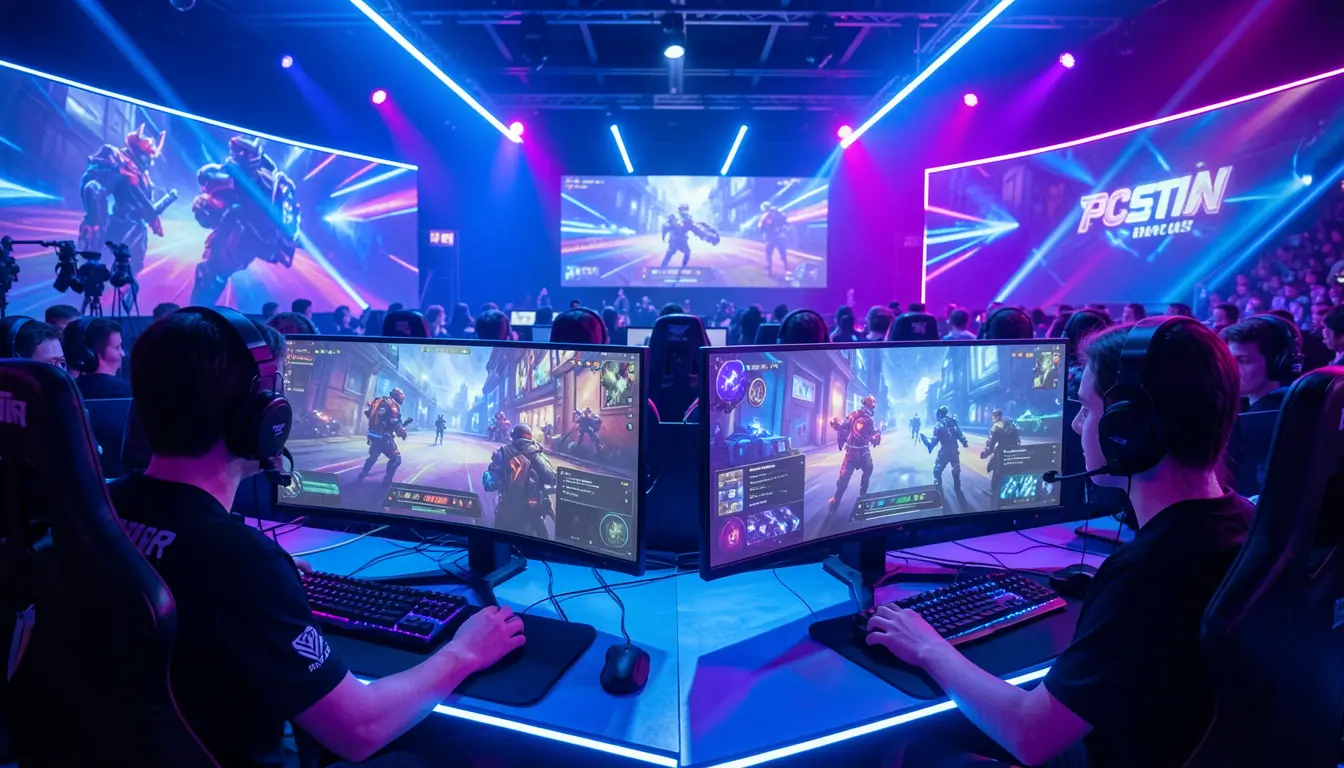
The competitive gaming landscape has evolved dramatically over the past few years, and players worldwide are constantly seeking reliable platforms and resources to sharpen their strategic skills. Whether you’re a novice exploring the world of online gaming for the first time or an experienced competitor looking to refine your gameplay, a dedicated playing games blog playbattlesquare serves as an invaluable resource for understanding advanced mechanics, developing winning strategies, and connecting with a vibrant community of like-minded enthusiasts.
Gaming has transcended casual entertainment and become a legitimate sphere where players invest considerable time and effort to master complex gameplay systems. The modern gamer requires more than just access to games—they need mentorship, strategic guidance, and a supportive community that understands the nuances of competitive play. This is where specialized gaming blogs and platforms become essential. They bridge the gap between casual players and competitive professionals, offering insights that transform how players approach their favorite titles.
The playing games blog playbattlesquare ecosystem represents this evolution perfectly. It combines comprehensive guides, real-world player experiences, and actionable strategies that have proven effective across various competitive gaming environments. When you engage with quality gaming content from dedicated platforms, you’re not just reading—you’re learning from people who have invested thousands of hours understanding game mechanics, exploiting strategic advantages, and competing against opponents who are equally determined to win.
This comprehensive guide explores everything you need to know about leveraging a playing games blog playbattlesquare resource to elevate your gaming performance. We’ll dive deep into strategy development, community engagement, competitive preparation, and how to extract maximum value from your gaming investment.
Why Quality Gaming Blogs Matter for Competitive Players
The difference between a player who stagnates and one who continuously improves often comes down to information access and quality guidance. A playing games blog playbattlesquare dedicated to gaming strategy offers something YouTube videos and casual forums cannot—curated, in-depth analysis written specifically for players who take their improvement seriously.
Quality gaming blogs provide structured learning pathways. Rather than piecing together information from scattered sources, players can follow a coherent progression from fundamentals through advanced strategies. This systematic approach to learning is particularly valuable in complex games where understanding one mechanic requires foundational knowledge of previous concepts.
The expertise embedded in established gaming blogs carries weight that generic gaming content simply cannot match. When you’re reading strategic analysis on a playing games blog playbattlesquare platform, you’re accessing knowledge developed through competitive experience, extensive testing, and real-world application in high-stakes environments. Authors who have competed at meaningful levels understand the pressure situations, resource management challenges, and decision-making processes that casual players might overlook.
Furthermore, blogs create accountability and continuity. A blog focused on gaming strategy builds reputation over time, and that reputation depends on providing accurate, effective guidance. This creates natural quality control that separates dedicated gaming blogs from throwaway content created purely for algorithm manipulation.
Understanding Your Gaming Foundation
Before diving into advanced strategies available through a playing games blog playbattlesquare resource, it’s essential to honestly assess your current skill level and gaming foundation. Different players enter the competitive sphere at different points, and understanding where you stand determines which content you should prioritize.
Your gaming foundation encompasses several key elements:
Mechanical Proficiency involves your ability to execute the physical actions required by your game of choice. This includes response time, accuracy, coordination, and the muscle memory that allows you to perform complex actions under pressure. Developing mechanical proficiency requires dedicated practice, and quality gaming blogs often provide targeted drills and practice routines that accelerate this development.
Game Knowledge represents your understanding of game rules, available options, item interactions, map layouts, and all the static and dynamic information that comprises your game’s ecosystem. Complete game knowledge removes uncertainty from your decision-making process and allows you to focus on strategic execution rather than searching for information.
Decision-Making Speed reflects how quickly you can process information, evaluate options, and commit to action. Faster decision-making provides competitive advantages, particularly in time-sensitive scenarios. Gaming blogs often teach frameworks that accelerate decision-making by providing mental models for common situations.
Psychological Resilience determines how you perform under pressure, how you respond to setbacks, and your ability to maintain focus throughout extended competition. This often-overlooked aspect of competitive gaming receives dedicated attention on serious gaming blogs.
Understanding these foundational elements helps you identify which playing games blog playbattlesquare resources and guides will provide maximum value to your development journey. Players with strong mechanics but weak game knowledge benefit most from strategic guides, while players with extensive knowledge but inconsistent performance might prioritize content addressing psychological aspects of competition.
Strategic Frameworks Every Competitive Player Should Master
Successful competitive gaming isn’t about random decision-making—it’s about applying consistent strategic frameworks that increase your probability of favorable outcomes. A quality playing games blog playbattlesquare platform teaches these frameworks systematically.
Resource Optimization forms the foundation of most competitive games. Whether managing gold in multiplayer online battle arenas, ammunition in tactical shooters, or deck construction in card games, understanding how to allocate limited resources for maximum effect separates winning players from those struggling at lower competitive tiers. Strategic blogs break down resource optimization into digestible principles you can apply to your specific game.
Risk Assessment and Management involves evaluating the probability of different outcomes and choosing actions aligned with your risk tolerance and game state. Conservative play in favorable positions secures wins, while aggressive plays in desperate situations offer the only path to victory. Understanding when to shift your risk profile represents a critical skill that blogs develop through case studies and situational analysis.
Positional Advantages concentrate on understanding how your game position relative to opponents creates or diminishes your winning probability. In team-based games, this might involve map control and rotations. In one-on-one competitions, it might involve resource distributions or initiative. Blogs teaching positional concepts help players recognize valuable positions and understand how to maintain or build advantages.
Adaptation and Flexibility recognize that opponents adjust their strategies, new patches change game balance, and rigid adherence to outdated strategies leads to predictable losses. Quality gaming blogs emphasize learning meta-games—understanding the current competitive environment and adapting your approach accordingly. This requires reading blogs consistently, as the meta-game evolves constantly.
Information Warfare involves understanding what information opponents possess and controlling what they know about your strategy. Deception, misdirection, and information denial become powerful tools in sophisticated competitive play. Blogs exploring these psychological dimensions of competition provide competitive advantages that mechanical skill alone cannot deliver.
Case Study One: The Transformation of Marcus—From Casual Player to Competitive Contender
Marcus began as a casual player engaging with games primarily for entertainment. He played regularly but invested minimal effort into improvement, content consumption, or community engagement. His skill ceiling remained low because he applied no systematic learning approach.
Everything changed when Marcus discovered a comprehensive playing games blog playbattlesquare resource dedicated to his game of choice. Initially skeptical about whether blog content could genuinely improve his performance, Marcus committed to one month of following the blog’s beginner to intermediate progression guides.
Within three weeks, Marcus recognized dramatic improvements in his win rate. He wasn’t suddenly mechanically superior—instead, he understood game concepts he’d never consciously recognized before. The blog’s explanations of positioning, resource allocation, and decision-making frameworks transformed his understanding of why certain plays succeeded while others failed.
Over six months of consistent engagement with blog content, supplemented by applying lessons in actual gameplay, Marcus progressed from casual player to competitive contender. He began entering local tournaments and discovered his skill level matched players he previously thought were simply naturally gifted. The difference wasn’t inherent talent—it was systematic learning through quality educational resources.
Marcus’s story illustrates a fundamental truth: access to quality information and structured learning dramatically accelerates competitive development. A playing games blog playbattlesquare platform provides exactly this type of accelerated pathway.
Case Study Two: The Specialization Journey of Jennifer—Finding Your Competitive Niche
Jennifer initially tried mastering every aspect of her game simultaneously. She studied general strategy, champion guides, positioning, itemization, and mechanical execution all at once. This scattered approach left her competent but specialized in nothing.
A turning point came when she consulted a playing games blog playbattlesquare resource that recommended specialization frameworks. Rather than attempting omniscience, the blog suggested developing expertise in two or three specific champions, learning map control systems deeply, and specializing in one role initially.
This focused approach aligned with how human learning actually works. By concentrating on specific domains, Jennifer built genuine expertise rather than surface-level familiarity across too many areas. Within three months of specialized learning guided by blog content focused on her chosen specialization, her performance metrics improved dramatically.
The blog’s content guided her through the specialization process—identifying which champions matched her playstyle, developing matchup knowledge, and building muscle memory around her selected champions. Rather than forcing herself into playstyles that didn’t suit her, the blog helped Jennifer recognize her natural strengths and build expertise around them.
Jennifer’s experience demonstrates how quality gaming blogs serve as mentors, guiding players toward efficient specialization rather than inefficient attempts to master everything. Her competitive results improved not through working harder, but through working more strategically based on blog-guided insights.
Building a Sustainable Practice Routine Using Blog Guidance
Reading strategy blogs and practicing in-game represent two sides of the same coin—knowledge without practice remains theoretical, while practice without structured learning perpetuates inefficient habits. Quality gaming blogs address both components.
Deliberate Practice Structure represents the first component. Rather than grinding hours without purpose, blogs teach targeted practice routines addressing specific skill deficiencies. A blog might recommend one-on-one practice scenarios isolating particular matchups, drill exercises developing mechanical consistency, or theoretical study of complex game systems.
The most effective practice routines incorporate variation and progressive difficulty. Blogs recognize that repeatedly executing identical scenarios under identical conditions provides diminishing returns. Instead, quality content introduces variations that force players to apply principles in new contexts, accelerating learning.
Meta-Game Study requires dedicating time to understanding the current competitive environment. Playing games blog playbattlesquare resources excel at documenting meta-game shifts—explaining why certain strategies suddenly become popular, how new patches change balance, and which new strategies are gaining competitive traction. Players who stay current with meta-game information maintain competitive relevance, while players ignoring meta-game shifts find their strategies becoming stale and predictable.
Review and Analysis involve studying your own gameplay with a critical eye toward improvement opportunities. Quality blogs teach frameworks for analyzing losses objectively, identifying decision points where alternative choices might have changed outcomes, and recognizing patterns in your performance. This self-analysis process separates players who learn from losses and those who repeat mistakes indefinitely.
Community Engagement transforms solitary practice into a collective learning experience. A playing games blog playbattlesquare platform with active community features creates opportunities to discuss strategies, ask questions, and benefit from collective wisdom. This social dimension accelerates learning and prevents the plateaus that often plague isolated players.
Advanced Strategy Concepts for Competitive Excellence
Once foundational concepts are mastered, competitive players benefit from exposure to more advanced strategic thinking. Quality blogs dedicate significant space to these sophisticated concepts that separate merely competent players from genuinely excellent ones.
Information Asymmetry Exploitation involves recognizing situations where you possess information your opponent lacks and making decisions that capitalize on this advantage. A blog exploring this concept might discuss vision control, prediction, and psychological information warfare—understanding when your opponent is likely bluffing or overcommitting based on information gaps.
Threat Assessment and Prioritization requires evaluating multiple dangers and committing resources to the most critical threats first. Rather than reactively addressing whatever threat appears most immediate, superior players evaluate probability and impact of various threats, allocating resources strategically. Blogs teaching threat assessment help players develop this sophisticated prioritization skill.
Economic Cycles and Timing Windows recognize that most competitive games involve natural cycles where certain plays become viable or unviable depending on resource states and timing. Understanding these cycles allows superior players to plan multiple moves ahead, capitalizing on timing windows their opponents haven’t yet recognized.
Psychological Profiling and Adaptation takes information about opponent tendencies and converts that information into strategic adjustments. A blog might teach how to recognize aggressive versus defensive opponent profiles, how to exploit predictable patterns, and how to adjust strategies based on accumulated knowledge of individual opponents.
Leveraging Community Features on Gaming Platforms
A playing games blog playbattlesquare ecosystem isn’t just about passive content consumption—it’s about active community participation that accelerates your development through collective learning.
Discussion Forums and Threads create opportunities to debate strategy, challenge assumptions, and benefit from multiple perspectives. Engaging in genuine strategic discussions forces you to articulate your reasoning, defending positions against thoughtful criticism. This process clarifies your own thinking and exposes gaps in your understanding.
Mentorship Connections often emerge naturally within active gaming communities. Experienced players who’ve already completed the journey you’re beginning offer perspective and guidance unavailable through blog posts alone. A playing games blog playbattlesquare platform facilitates these mentorship relationships by bringing players together around shared interests.
Tournament Organization and Competition gives players opportunities to test their skills against competitive opponents outside their usual circles. Blogs often facilitate or promote tournaments, creating competitive pathways for players at all skill levels. This structured competition provides accountability and forces players to apply lessons under pressure.
Strategy Collaboration enables groups of players to develop strategies collectively. Rather than working in isolation, players brainstorm ideas, test concepts together, and develop team strategies. Collaborative strategy development often produces more sophisticated approaches than individual analysis.
Adapting to Meta-Game Shifts and Patches
One challenge all competitive players face involves adapting to balance changes, patches, and meta-game shifts that alter the competitive landscape. Quality gaming blogs prove invaluable during these transition periods.
When patches release significant balance changes, blogs rapidly publish analysis explaining how changes affect the competitive environment. Rather than struggling to understand implications yourself, you access expert analysis explaining which strategies remain viable, which strategies become obsolete, and which new strategies emerge as opportunities.
The most helpful blogs go beyond surface-level analysis, exploring second and third-order effects of changes. A patch might nerf a specific champion, but blogs explore how this affects role distribution, rotation patterns, and overall strategic viability. This deeper analysis helps players adapt more completely than surface-level patch summaries.
Blogs also track meta-game evolution over time, demonstrating how professional players and high-level competitors adapt to changes. By studying these adaptations, players accelerate their own meta-game understanding rather than independently arriving at the same conclusions.
Monetization and Long-Term Sustainability in Competitive Gaming
For players considering competitive gaming as more than just a hobby, understanding the landscape of competitive opportunities becomes essential. A playing games blog playbattlesquare resource helps players understand viable paths toward monetization.
Tournament Winnings represent the most obvious path, where players earn money by performing well in organized competitions. Blogs document available tournaments at various skill levels, prize pools, and competition intensity. This information helps players understand what level of competition they should target initially. Quality blogs discuss not just elite professional tournaments, but amateur circuits, regional competitions, and online tournaments that provide realistic opportunities for developing players to build competitive experience and earn meaningful winnings.
Content Creation offers another viable path where skilled players monetize their expertise through streaming, YouTube content, or writing. Blogs often discuss content creation strategies, teaching how players can build audiences and convert gaming expertise into income. Players who become known for particular strategies or specific game expertise can build platforms around their knowledge, creating sustainable income independent of tournament performance.
Professional Teams and Organizations represent the ultimate goal for many competitive players. Blogs discuss how professional organizations recruit players, what skill levels and performance metrics lead to professional opportunities, and how players can position themselves for professional consideration. Understanding the scouting process, the importance of tournament results versus ladder rankings, and how to network effectively with professional organizations increases the likelihood of catching attention from relevant teams.
Understanding these pathways early in your competitive journey allows you to make strategic decisions about specialization and skill development that align with your long-term goals. A playing games blog playbattlesquare platform provides crucial information about the landscape competitive players navigate.
Case Study Three: The Organizational Success of Team Phoenix—Coordinated Growth Through Community
Team Phoenix began as a group of five friends who regularly played together casually. They shared similar competitive aspirations but lacked structured development framework. Individual players were improving at different rates, and the team’s coordination remained inconsistent and often problematic during competitive matches.
Everything changed when the team discovered a playing games blog playbattlesquare resource with specific content addressing team development and coordination. Rather than just improving individually, the team studied content about team composition, role specialization, macro-strategy, and communication frameworks. They implemented the blog’s recommendations systematically—assigning defined roles based on individual strengths, developing team-specific strategies, and creating communication protocols that made their gameplay substantially more coordinated.
Within three months of applying blog-guided team development frameworks, Team Phoenix’s competitive performance improved dramatically. They won their first regional tournament, a milestone none of them had achieved individually. More importantly, the team bonded around shared improvement goals and collective progress. The playing games blog playbattlesquare resources didn’t just improve their individual skills—they transformed how the team functioned as a unit.
Team Phoenix’s experience demonstrates how quality gaming blogs serve not just individual players but entire teams. By studying content specifically addressing team dynamics, role distribution, and collective strategy, teams accelerate their development far beyond what individual improvement alone achieves.
Developing Mental Resilience and Competitive Psychology
While technical skill and strategic knowledge receive substantial attention on quality gaming blogs, psychological aspects of competition often receive insufficient emphasis. Yet mental resilience and competitive psychology dramatically impact actual performance under pressure.
Superior competitive performance requires emotional regulation—maintaining focus and clarity even when losing, managing frustration productively rather than allowing it to compound errors, and sustaining confidence after setbacks that would discourage less-prepared competitors. A playing games blog playbattlesquare platform addressing psychological dimensions teaches these essential skills.
Handling Setbacks Constructively begins with reframing losses as learning opportunities rather than failures reflecting personal inadequacy. Blogs discussing this concept help players develop healthy loss psychology, viewing defeats as data points indicating what requires improvement rather than evidence that they lack competitive capability.
Pressure Management involves recognizing the physiological and psychological manifestations of competition pressure and developing techniques that maintain performance despite this pressure. Some players freeze under pressure, others become reckless. Quality blogs teach specific techniques—breathing patterns, pre-competition routines, and mental visualization—that maintain consistent performance regardless of pressure intensity.
Confidence Development requires earned confidence based on accumulated evidence of competence rather than false bravado disconnected from reality. Blogs help players build genuine confidence through systematic improvement, documented progress, and accumulated victories against meaningful competition.
Opponent Analysis Without Intimidation involves studying opponent capabilities and tendencies while maintaining confidence that you possess competitive capability. Blogs teach this balance, ensuring preparation doesn’t transform into psychological defeat before competition begins.
The Role of Analysis Tools and Resources
Modern gaming blogs often integrate or discuss analysis tools that transform raw gameplay data into actionable insights. A playing games blog playbattlesquare resource often features content discussing these tools and how to extract value from them.
Replay Analysis Tools allow players to review their own gameplay systematically, identifying decision points, tactical errors, and mechanical mistakes. Blogs teach how to review replays productively—focusing on specific aspects rather than watching entire replays aimlessly, identifying patterns across multiple matches, and recognizing recurring mistakes that require focused correction.
Statistics and Performance Tracking provides quantitative data about your performance across various metrics. Blogs help players interpret this data correctly, understanding which metrics matter most for competitive success and which metrics represent misleading vanity statistics.
Opponent Research Tools facilitate gathering information about competitors—their playstyles, preferred strategies, common mistakes, and tendencies. Blogs discuss ethical research (studying publicly available data) versus problematic approaches, emphasizing preparation techniques that are genuinely competitive advantages rather than giving unfair advantages.
Community Analytics aggregate data across entire player populations, providing meta-game information about strategy prevalence, win rates for various approaches, and how the competitive landscape changes over time. This crowd-sourced intelligence helps individual players understand macro-level trends affecting their competitive decisions.
Building Your Personal Learning Plan
While general blog content provides tremendous value, personalized learning plans that address your specific development needs produce faster progress. A quality playing games blog playbattlesquare resource helps players construct these customized improvement plans.
Begin by honestly identifying your current limitations. Are your losses typically attributable to mechanical mistakes, strategic errors, poor decision-making, or psychological factors? Different diagnoses lead to different learning priorities. A player whose losses stem from mechanical inconsistency benefits most from practice drills, while a player whose losses result from poor macro-strategy benefits more from strategic analysis content.
Next, identify your learning style. Some players learn best through detailed written analysis, while others benefit more from video breakdowns and visual demonstrations. Quality blogs recognize these differences and provide content in multiple formats, allowing you to consume information in formats matching your learning style.
Finally, create a realistic content consumption schedule that doesn’t overwhelm you. Reading blog content consistently over months produces better results than intensive consumption followed by dormancy. Dedicating 30 minutes daily to blog reading, supplemented by weekly video content and monthly deep-dives into specific topics, creates sustainable learning momentum.
Your personal learning plan should evolve as you improve. Skills that required conscious attention become automatic, allowing you to focus learning efforts on your next development frontier. Regular reassessment of your limitations ensures your learning stays aligned with your actual needs rather than addressing outdated problems.
Frequently Asked Questions
Q1: What skill level should I be before I start reading strategy blogs? Strategy blogs serve players at all skill levels. Beginners benefit from fundamentals and foundational concepts, while advanced players gain value from sophisticated strategy discussion and meta-game analysis. The key is finding content pitched at your current level initially, with plans to progress to more advanced material as you develop.
Q2: How often should I check gaming blogs for new content? Following a schedule of checking blogs two to three times weekly keeps you current with meta-game shifts, patch analysis, and emerging strategies without creating information overload. Most quality blogs maintain consistent publishing schedules, allowing you to integrate blog reading into your routine naturally.
Q3: Can blog content alone improve my competitive performance? Blog content provides the strategic and conceptual framework for improvement, but in-game practice applies these concepts practically. The combination of learning from blogs and dedicated practice produces results; either element alone creates incomplete development.
Q4: How do I know if blog advice actually works for my specific game and playstyle? Test recommendations systematically in practice scenarios before applying them in competitive matches. This experimentation approach validates whether advice applies to your situation and helps you understand principles deeply rather than merely copying recommendations.
Q5: What should I do if I disagree with blog analysis? Disagreement often indicates an opportunity for deeper learning. Engage with the author’s reasoning, attempt to understand the perspective, and test recommendations to form your own conclusion. Critical thinking combined with experimentation produces better results than either blind acceptance or immediate rejection.
Q6: How can I contribute to gaming communities beyond passive consumption? Share your own experiences, ask thoughtful questions, participate in strategy discussions, and help newer players understand concepts you’ve mastered. Communities thrive when members contribute actively, and your participation benefits both others and your own development through teaching and collaborative learning.
Q7: Should I specialize in one game or play multiple games competitively? Specialization generally produces faster development within any single game, as you build deeper expertise and benefit from repeated practice in consistent systems. However, some players enjoy variety and find playing multiple games sustains long-term interest. Choose based on your preferences and realistic time commitment.
Q8: How do I handle losing streaks while learning from blogs? Losing streaks during skill development often indicate you’re reaching new skill ceilings where old strategies become insufficient. Rather than abandoning blog-guided learning, use losing streaks as signals to focus on blog content addressing your specific weakness areas. Losses provide valuable data about improvement opportunities.
Q9: Can I compete professionally without starting as a casual player? Professional players come from various backgrounds, but most benefit from competitive learning early in their gaming journey. Regardless of starting point, systematic learning through quality resources like gaming blogs accelerates the timeline toward professional-level performance.
Q10: How do I balance entertainment and serious improvement? Remember that gaming should remain enjoyable. If pursuing competitive improvement eliminates fun, motivation evaporates. Balance competitive practice sessions with casual gameplay where you experiment with new ideas without performance pressure. Quality blogs recognize this balance, offering both serious competitive content and entertainment-focused pieces.
Conclusion
Engaging with a quality playing games blog playbattlesquare resource represents one of the highest-leverage decisions competitive gamers can make. The investment of time reading blogs and applying guidance yields disproportionate returns in competitive development compared to equivalent time spent grinding alone.
The most successful competitive players understand that improvement accelerates when quality information guides practice. Rather than independently discovering principles through trial and error, players who engage seriously with educational blogs benefit from accumulated knowledge of countless players who’ve already solved the problems they face.
Your competitive journey begins with honest assessment of current ability, commitment to systematic improvement, and engagement with quality educational resources. A playing games blog playbattlesquare platform provides the structured guidance transforming casual gamers into competitive contenders, and competitive players into genuine experts.
The competitive gaming landscape continues evolving, with new strategies emerging constantly and meta-games shifting frequently. Your engagement with quality gaming blogs ensures you remain current, adaptable, and continuously improving. Start where you are, consume content deliberately, apply lessons systematically through practice, and trust that consistent effort guided by quality information produces extraordinary results.
The gap between where you are now and where you want to compete isn’t nearly as wide as it might appear. That gap closes fastest when you combine your effort with quality guidance. Your journey toward competitive excellence begins now—choose your playing games blog playbattlesquare resource carefully, commit to the process, and prepare for the dramatic improvements that systematic learning produces.
For More Visits: Pika Fashion
Also Read: Paula Pacino: Uncovered Most Powerful Privacy Story